Remember when field positioning meant waiting for action to find you? Those days are gone forever. The game has transformed completely.
Today’s defense is like a chess match, not just athletic intuition. We’ve moved from waiting for action to using predictive analytics. It’s like something NASA engineers would be proud of.
This change has made defense a key part of the game. It’s Moneyball meets military strategy – but with sunflower seeds instead of camouflage.
The game now asks for constant change. Teams use data to analyze every detail. Who knew stats could be so exciting?
Field Positioning
The shift in baseball is more than a strategy; it’s a big change. It has made some fans upset. Now, fielders move around like they’re playing chess, using lots of data.
Teams don’t just place players anymore. They use data to decide where to put them. They look at charts and data on how fast the ball goes to figure out where it will land.
Defensive shifts that look strange to fans are actually smart moves. They are based on how batters hit the ball. For example, if a left-handed hitter is up, the right side of the infield might move.
Teams have special coaches who watch lots of games. They study how batters swing and where they hit the ball. This helps them set up the best positions for defense.
Modern defense is all about being flexible. Fielders change their positions often, based on the game’s flow. It’s like a dance that changes with every step.
This new way of playing defense has made some plays almost certain. What used to be hits are now caught by fielders in strange positions. The game has evolved, and it’s exciting.
Double Play Strategies
What makes some double plays stand out? It’s the silent understanding between the middle infielders. They start communicating before the ball is even thrown. They read the batter’s moves and the game’s situation like chess players.
This isn’t just fielding. It’s like solving a complex puzzle on the field. The shortstop and second baseman position themselves based on detailed calculations. Their setup turns the game into a series of precise, calculated plays.
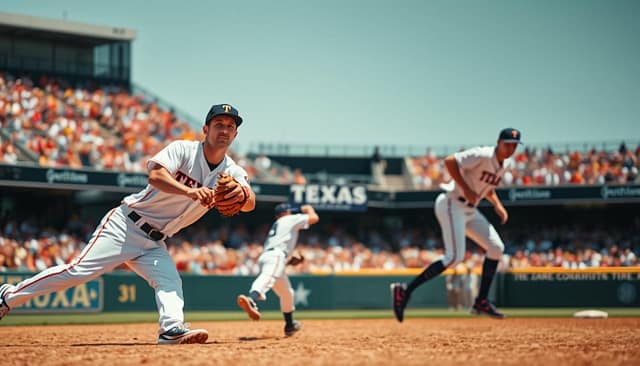
Look at a first baseman’s footwork during a double play. It’s a mix of ballet and physics. Their movements are so precise, they can turn a simple out into a highlight.
The modern double play uses football’s defensive strategies. Infielders adjust their positions based on the hitter’s tendencies. They’re not just reacting; they’re predicting the ball’s path before it’s hit.
For a double play to succeed, everyone must know their part. The pivot man knows where to expect the ball. The covering infielder anticipates the throw. The first baseman times their stretch perfectly. When done right, it looks like a well-rehearsed dance.
This teamwork turns a simple play into a game-changer. The best double play teams develop a connection through practice. They make the routine play look like art.
Defensive Communication
Ever watch a baseball game and think it’s just nine individuals waiting for something to happen? You’re missing the symphony of silent signals and coded chatter. This makes baseball defense more sophisticated than a CIA operation. The infield during a tight game isn’t quiet—it’s a verbal chess match.
Catchers run this defensive communication network with more complexity than your average corporate flowchart. Their fingers don’t just call pitches—they orchestrate entire defensive shifts. A subtle tap on the thigh might signal “infield in,” while a closed fist could mean “bunt defense active.” It’s sign language with stakes.
Infielders communicate through what looks like casual chatter but is actually coded intelligence. “Hey batter batter” isn’t just heckling—it’s often timing for defensive rotations. Outfielders use glove positioning and subtle body shifts that would make a traffic controller proud. A raised elbow might mean “I’m playing shallow,” while a step to the side could signal “cover the gap.”
The real magic happens during those high-pressure moments with runners on base. Suddenly that casual infield chatter transforms into precise military-style communication:
- Verbal codes for cut-off assignments
- Non-verbal signals for possible steals
- Position adjustments based on batter tendencies
- Emergency protocols for defensive shifts
This defensive coordination system adapts football’s communication strategies to baseball’s unique rhythm. Where football has radio helmets, baseball has developed its own organic language of gestures and phrases. The best defenses operate like a jazz ensemble—improvising within structure, reading each other’s movements, and anticipating plays before they develop.
Modern baseball defense has evolved beyond simple positioning. It’s now a dynamic conversation between players who’ve developed their own linguistic shorthand. They’re not just reacting to the ball—they’re predicting outcomes through constant communication. This silent language turns individual athletes into a cohesive defensive unit that operates with near-telepathic precision.
Role of Advanced Metrics
Welcome to baseball’s nerd revolution. Spreadsheets are now more valuable than sunflower seeds. We’ve moved beyond simple fielding percentages to a world where defensive evaluation is more complex.
The holy trinity of WAR, UZR, and DRS are not just acronyms. They’re the secret language of front offices deciding who stays and who goes.
Remember when we judged defenders by errors? That’s like evaluating a surgeon by how many sponges they drop. Modern metrics analyze what players should have caught based on hang time, exit velocity, and spray angles.
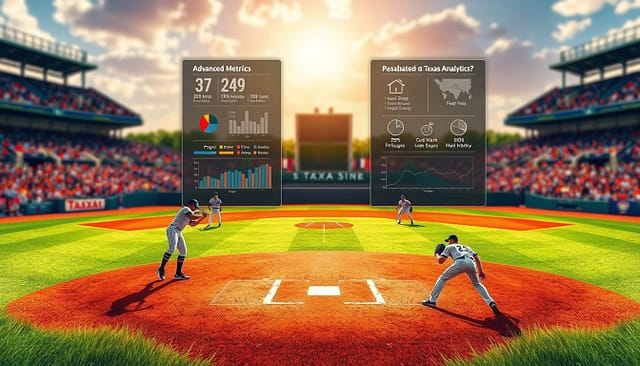
Teams now use these metrics to solve baseball’s eternal question: where should defenders stand? The answer changes by batter, count, pitcher, and even weather conditions. This isn’t your grandfather’s “play deep for power hitters” advice.
We’re talking about sabermetric analysis that would make Pythagoras proud of these new defensive equations.
Consider the radical shifts we see today. Third basemen play in short right field. Outfielders switch positions between pitches. This isn’t random experimentation – it’s data-driven positioning calculated to millimeter precision.
The metrics measure everything from first-step quickness to route efficiency. They quantify range in ways the naked eye never could. A shortstop might look spectacular diving for balls, but if he’s getting to fewer balls than average, the metrics will expose the theatrics.
Front offices now project defensive decline years before it becomes obvious. They can identify which minor leaguers will thrive at specific positions based on their acceleration patterns and arm angles. It’s Moneyball grew up, got a PhD in analytics, and started solving defensive puzzles we didn’t even know existed.
The revolution has changed how teams construct entire defenses. Why pay for a famous name when the metrics show a cheaper player gets better jumps on fly balls? Why stick with a veteran when the data suggests his range has declined by 3.2 feet per season?
This analytical approach has transformed defensive strategy from art to science. Managers now receive index cards with precisely calculated positions for each batter. Infield shifts have become so sophisticated they account for the spin rate of the upcoming pitch.
The nerds have won. And honestly? The game has never been more intellectually fascinating.
Game Examples
Sometimes, baseball defense looks like a dance. Let’s look at three games where defense turned disaster into beauty.
The 2020 World Series showed us how to adapt on defense. The Rays used a four-outfielder shift against Corey Seager. This turned a line drive into an easy out, saving the game.
In the 2021 NLCS, the Dodgers used data to position their infield. Against Freddie Freeman, they made three groundouts that should have been hits. Their defense was perfect, despite the stats saying it was unlikely.
Here’s how a perfect defensive play works:
- Pre-pitch positioning: Using data to guess the hitter’s move
- First-step quickness: Reacting fast to the ball
- Route efficiency: Taking the shortest path to the ball
- Transfer and throw: Smoothly moving the ball from glove to hand
The 2019 AL Wild Card game was a defensive masterpiece. Tampa Bay’s shift turned a sure hit into a double play. Oakland’s hitters were stunned.
Today’s best defenses don’t just make spectacular catches. They make the impossible look easy with smart planning and positioning. They turn most expected hits into outs.
| Game | Defensive Team | Key Play | Win Probability Shift |
|---|---|---|---|
| 2020 WS Game 4 | Tampa Bay Rays | Four-outfielder shift | +22% |
| 2021 NLCS Game 3 | Los Angeles Dodgers | Analytics-driven positioning | +18% |
| 2019 AL Wild Card | Tampa Bay Rays | Infield shift double play | +31% |
| 2022 NLDS Game 2 | San Diego Padres | Outfield alignment adjustment | +15% |
These examples show that fielding is more than just athleticism. It’s about smart planning and quick action. Teams that excel in both turn defense into a strong advantage.
Next time you watch a game, pay attention to the defense between pitches. That’s where the magic happens, before the ball is even thrown.
Player Highlights
While everyone’s busy drooling over home runs and strikeout numbers, the real defensive artists are quietly redefining what’s possible on the field. These aren’t just players – they’re defensive savants who treat the baseball diamond like their personal canvas.
Take Fernando Tatis Jr., for example. The man doesn’t just play shortstop; he conducts gravitational experiments with baseballs. Watching him range to his right is like watching a physics professor solve an equation you didn’t even know existed. His first-step quickness isn’t just good – it’s borderline telepathic.
Then there’s Mookie Betts, who apparently has GPS implants instead of eyes. His route efficiency in right field makes Google Maps look like a tourist with a paper map. Betts doesn’t chase fly balls – he simply arrives at their future landing spot before the ball does. It’s less outfield play and more temporal displacement.
What separates these defensive wizards from mere mortals? It’s not just physical tools – though those help. It’s the combination of:
- Pre-pitch anticipation that would make a poker champion jealous
- Spatial awareness that defies conventional geometry
- First-step explosiveness that should require FAA clearance
- Soft hands that could catch a falling soufflé
Nolan Arenado at third base demonstrates this defensive artistry perfectly. His reaction time at the hot corner makes you wonder if he’s seeing the future. The ball leaves the bat, and Arenado’s already moving before your brain processes the sound. It’s not defense – it’s pre-crime for baseballs.
| Player | Position | Defensive WAR | Ultimate Zone Rating | Signature Move |
|---|---|---|---|---|
| Fernando Tatis Jr. | Shortstop | 1.8 | 5.2 | Gravity-defying range |
| Mookie Betts | Right Field | 2.1 | 6.8 | Precision route running |
| Nolan Arenado | Third Base | 2.4 | 7.1 | Instant reaction reflexes |
| J.T. Realmuto | Catcher | 1.9 | 4.7 | Pop-time wizardry |
These defensive specialists prove that great defense isn’t just about preventing runs – it’s about changing the game’s entire energy. A spectacular diving stop doesn’t just record an out; it demoralizes offenses and electrifies entire ballparks.
The best part? This defensive renaissance isn’t limited to one position. From catchers with pop times that break the space-time continuum to center fielders who cover more ground than a Midwest storm system, we’re witnessing a golden age of defensive excellence.
In a world obsessed with offensive fireworks, these defensive artists remind us that sometimes the most beautiful plays are the ones that prevent the other team from scoring. Their defense isn’t just effective – it’s downright inspirational.
Training for Excellence
Ever wonder how modern defenders can read plays before they happen? It’s all about training that’s as precise as NASA’s. Today’s defensive training mixes military precision with athletic skill.
Virtual reality systems now create game scenarios with amazing accuracy. Players wear VR headsets that show opposing offenses in great detail. They practice reading formations and reacting to plays without physical contact. It’s like playing chess against a supercomputer that knows all your moves.
Specialized drills improve first-step quickness and spatial awareness. Coaches use laser timing systems to measure reaction times down to milliseconds. Players work on angle recognition and closing speed until their movements become instinctual. The goal? Making every defensive position feel like home territory.
Modern training focuses on three key elements:
- Cognitive loading – training the brain to process information faster
- Position-specific drills – customized workouts for each defensive role
- Recovery technology – using data to optimize rest and preparation
The best programs mix old-school fundamentals with new tech. Players do countless ground balls and work on basic footwork. But now they’re wearing sensors that track every movement and provide instant feedback. It’s like having a personal defensive coordinator in your ear.
These methods create defenders who anticipate plays instead of just reacting. They have the spatial awareness of fighter pilots and the reflexes of concert pianists. The result? Athletes who turn defensive positions into art forms.
Alumni Reflections
Remember when fielding shifts meant changing gears at the factory job? I’ve heard stories from veterans who played when defense was more art than algorithm. Former Dodgers coach Tom Lasorda once told me, “We positioned guys by gut feeling, not Google spreadsheets.”
Today’s analytics-driven fielding would baffle those old-school minds. They operated on instinct and observation, not exit velocity and launch angles. Modern defensive positioning looks like chess with mitts, calculated to the decimal point.
Yet the alumni wisdom remains relevant. Great fielding requires quick reflexes, soft hands, and situational awareness. The tools changed but not the soul of defense.
Current players would benefit from these conversations across generations. The marriage of traditional knowledge with modern metrics creates the most complete defensive players. Fielding excellence continues evolving, blending yesterday’s wisdom with tomorrow’s data.