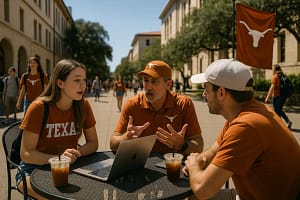
Think of navigating the NCAA’s rulebook like playing a board game. But the instructions were written by lawyers. We’re here to make it easier to understand.
Those NCAA core courses aren’t just any classes. They’re the specific, approved curriculum that shows you’re an amateur athlete. Your GPA requirements work with test scores to unlock certain college doors.
The five-year eligibility clock starts when you enroll full-time. That’s 12 credit hours at most schools. The NCAA gives you five years to complete four seasons. This clock doesn’t stop for injuries, redshirt years, or crises. It’s a relentless march forward.
Getting this academic foundation right is key. For the complete playbook, including Texas Longhorns compliance guidelines, check the detailed resource page. Let’s break down how you actually play this game.
Texas High School Course Planning
Your freshman year schedule is more than just avoiding early morning classes. It’s the start of a four-year academic journey. You’re like a curriculum architect, building a profile that meets two different sets of rules.
The NCAA Eligibility Center wants you to check off core courses like items on a list. At the same time, admissions Texas offices, like UT Austin, read your transcript like literary critics. They look for more than just checkmarks.
This situation is like the “Academic Double Play.” You must balance both to move forward. If you fail, you might get stuck between eligibility and acceptance.
Let’s look at the key areas. The NCAA requires 16 core courses, divided into specific categories:
- 4 years of English: More than just diagramming sentences
- 3 years of Math: Algebra I or higher—geometry counts
- 2 years of Science: One must be lab-based
- 2 years of Social Studies: History, economics, government
- 1 additional year: English, Math, or Science
- 4 additional core courses: From any category above or foreign language
But Texas admissions adds its own twist. While the NCAA sees a checklist, UT Austin looks for character. They value learning, discovery, freedom, leadership, individual opportunity, and responsibility.
As one source said, “If a kid is good enough to have the academics and scores while developing his baseball skills to the highest level, he has earned his slot.” Notice the order? Academics first, scores second, baseball third. That’s the hierarchy whether we like it or not.
So, how do you create a transcript that meets both needs? Let’s plan a four-year strategy:
| Year | NCAA Focus | Texas Admissions Focus | Pro Tip |
|---|---|---|---|
| Freshman | Start core courses immediately | Show upward trajectory | Avoid “easy” electives that look like padding |
| Sophomore | Complete 6+ core courses | Add academic rigor visibly | One weak year haunts like a bad slider |
| Junior | Finish most core requirements | AP/IB/Dual Credit for depth | This is your academic showcase season |
| Senior | Finalize all 16 cores | Demonstrate college readiness | Senioritis is more visible than you think |
The balancing act is real. You need enough rigor to impress admissions Texas committees, but not so much that your GPA drops. A strategic B in AP Calculus often looks better than an A in remedial math.
Most recruits miss this: Texas schools, like UT Austin, see your academic record as your first audition. Before they see your swing or your fastball, they look at your GPA and course selection. It’s like walking into the batter’s box—your preparation is judged before you ever see a pitch.
Build your foundation early and often. Load up on those NCAA-approved cores like you’re stocking a bullpen. Create a transcript that doesn’t just meet minimums but screams “college-ready” in bold font. Because in the competitive landscape of Texas admissions, your academic game plan needs to be as polished as your defensive skills.
Remember: You’re not just taking classes. You’re constructing evidence. Every course selection is a data point in your case for being that rare recruit who has, as our source said, “earned his slot” through complete development. The classroom isn’t separate from the diamond—it’s the foundation the diamond sits on.
Test-Optional Reality for Baseball Recruits
Think test-optional admissions are a free pass? That’s like thinking a called third strike doesn’t count. The policy swept through campuses like a new pitch everyone wanted to try. But here’s the analytical truth: “optional” is a strategic position, not an automatic out.
For a baseball recruit, this is a nuanced calculation. Your athletic talent is your fastball. Your GPA is your command. A strong SAT or ACT score? That’s your knockout slider—another weapon that makes your entire academic profile more formidable.
Let’s be clear. Data shows that even in test-optional environments, submitted scores provide critical context. They often sit “over the middle of the admitting class,” reinforcing a solid transcript. It’s an extra data point that says, “I can handle the pace.”
So, when do you let your scores take the mound, and when do you keep them in the bullpen?
If your scores are a strength, submitting them is a no-brainer. It completes your scouting report. For programs with higher academic profiles—think selective liberal arts schools or elite academic conferences—a good score can be the tiebreaker. It shows you’re ready for the full dual challenge.
But what if your test score is, let’s say, not your masterpiece? This is where the true strategy of SAT/ACT optional comes in. Going test-optional lets your athletic video and consistent grades take center stage. You’re controlling the narrative. You’re saying, “Judge me on my proven body of work, not on a single Saturday morning.”
You must read the room. Some coaches quietly favor applicants who submit scores; it simplifies their academic vetting. Your job is to research. Does the school’s admissions page hint that scores are “considered if submitted”? That’s your signal.
Opting out should be a smart move, not just an easy one. It’s like choosing not to bunt with two strikes—you do it because the situation demands a different approach.
| Your Situation | Recommended Action | Strategic Rationale |
|---|---|---|
| Strong GPA + Strong SAT/ACT Score | Submit Scores | Builds an ironclad academic profile. Shows you excel in both long-term (GPA) and standardized settings. |
| Strong GPA + Moderate/Low Score | Consider Test-Optional | Protects your profile. Highlights your consistent performance without a weaker data point pulling down the average. |
| Upward Trending GPA + Improving Score | Submit if it reinforces the trend | Demonstrates growth and resilience. A recent, improved score can validate your academic upward trajectory. |
| Targeting Highly Selective Academic Schools | Almost always submit | Meets the unspoken expectation. In competitive academic pools, a missing score can be a question mark. |
| Coach explicitly advises “optional” | Follow coach’s guidance | The coach knows the admissions committee’s leanings. This is insider intelligence you should use. |
The bottom line? Don’t just default to SAT/ACT optional because it seems easier. Choose it because it’s smarter. Analyze your specific stats, research your target schools, and consult with your coach. In the high-stakes game of recruitment, every decision—even the ones you don’t make—requires a game plan.
Admissions Targets by Division/School Type
The college baseball admissions world is like a conference schedule. The SEC, Ivy League, and NJCAA each have their own rules. Each division has its own way of looking at academic success.
Why is this important? It’s like playing chess instead of checkers. Knowing the actual GPA requirements and what schools value most can save you time and stress.
Let’s look at the different levels. Top 25 programs, like those in the Big 12 or SEC, have strict rules. They look at your athletic ability, how well you fit on the team, and if you can handle tough classes. These schools graduate over 90% of their students in four years. They need players who can keep up.
For example, the University of Texas at Austin offers athletic, need-based, and academic scholarships. To get in, you need to show you’re ready for the whole experience, not just the sports part.
DII or DIII schools are different. They might not offer athletic scholarships, but they look closely at your grades and personal story. A JUCO focuses on if you’re ready to transfer in two years. It’s a quick race.
So, what are the realistic goals? The table below gives a glimpse into what each division values.
| School Type / Division | Typical GPA Focus (Recruited Athlete) | Admissions Leverage | Academic Priority |
|---|---|---|---|
| Division I (Power 5 Conferences) | Core GPA of 3.0+, strong test scores (if submitted). | Coach’s support is critical, but must meet university floor. | Graduation rate & academic reputation. Can you handle the pace? |
| Division I (Mid-Major) | Core GPA 2.8-3.3+. More flexibility with “project” players. | Coach’s support often decisive for borderline academic cases. | Progress toward degree & maintaining eligibility. |
| Division II | Core GPA 2.5-3.0+. Test scores often important. | Strong coach recommendation can tip scales. | NCAA Clearinghouse approval & solid core course completion. |
| Division III | Full academic profile (GPA, rigor, essays, activities). | Coach can advocate, but admissions office has final say. | Institutional fit & demonstrated intellectual curiosity. |
| JUCO (NJCAA) | Eligibility is key: minimum GPA for NCAA/NAIA transfer. | Coach’s need & your immediate eligibility status. | Completing transferable core courses. The two-year academic plan. |
At one end, you’re seen as a student-athlete where both parts matter equally. At the other, it’s all about being ready to transfer. You need to think carefully about where you fit best.
Look for schools where your grades are in the right range. This is the smartest way to build a college list. It’s the best strategy you can use.
Communicating Academics in Emails & Visits
Your first contact with a baseball team is more about showing your academic skills than throwing a fastball. Most coaches ignore unsolicited emails, treating them like junk. Your goal is to start building a relationship, not just get a quick reply.
Think of your first email as your academic introduction. It’s not just about showing off your skills. You’re making a thoughtful statement. You want to show you’re serious without sounding scripted.
Here’s the playbook:
- Lead with your academic fastball. Start by mentioning your GPA and class rank. Don’t hide this information.
- Highlight your rigorous course load. Talk about your AP or IB classes. Mentioning calculus or physics shows you’re serious.
- Connect your coursework to the real world. Explain how your classes relate to real-life situations. This shows you’re thinking ahead.
The key phrase is “NCAA core courses.” Let them know you’re on track to complete all required NCAA core courses with good grades. This shows you’re eligible and won’t be a compliance issue.
When you visit campuses, stand out from the crowd. Asking about the weight room is common. But asking about academic support is unique.
Prepare questions that show you understand the “student-athlete” balance:
- “How does the study hall schedule work during road trips?”
- “What majors are most compatible with the baseball travel schedule?”
- “Can you describe a typical week for a freshman player balancing practice and classes?”
These questions show you’re practical and respect academics. Coaches want players who see academics as part of the job, not a hassle.
Remember the Texas Athletics manual? It values academic integrity. Your questions show you’re already on board with their values. You’re showing you’ve done your homework, not just about their wins.
It’s all about showing, not bragging. You’re demonstrating your academic readiness through smart questions. This sets you apart as a true student-athlete, not just an athlete who happens to be a student.
End with a strong connection to their program’s strengths. If you’re interested in finance and they have a great business school, mention it. This shows you’re a good fit beyond the field.
Master this communication strategy. It turns your academic profile into a strong reason for coaches to invest in you. It shows you’re not just playing baseball; you’re building a future.
Time Management & Study Support in Season
Trying to balance a 56-game schedule with organic chemistry is tough. It’s like solving a Rubik’s Cube while riding a rollercoaster. You need a system to manage it all.
The season is a grind that eats up your calendar. Between practice, travel, and games, finding time to study feels impossible. It’s like trying to hit a 100 mph fastball blindfolded.
That’s where the institutional support system comes in. Forget trying to do it all alone. The smart player uses every resource available. This includes mandatory study halls, academic advisors, and tutoring networks.
As one Ivy League insider noted, the help is impressive if you seek it out. There are office hours, peer tutors, writing centers, and TA sessions. Your job is to walk through the door.
Here’s what that support infrastructure typically looks like at serious programs:
- Priority Registration: Get the classes that fit your travel schedule, not the leftovers.
- Dedicated Athletic Counselors: These people know the NCAA rulebook and your major requirements better than you do.
- Mandatory Study Hall: Structured, quiet time built into your day. No excuses.
- Subject-Specific Tutoring: From calculus to composition, help is on the roster.
Proactive time management is key. It means blocking out study periods like they’re team meetings. Use travel days to study—that bus ride is a mobile library.
Communicate with professors during the first week of class, not when you’re behind. This helps avoid last-minute stress.
An interesting side note: embracing a SAT/ACT optional admissions path can free up mental bandwidth. Instead of test prep, you can focus on solidifying your grades or actual coursework.
Schools that care about graduation rates invest in academic support. They want you to win on the field and graduate on time. Your scholarship and future depend on it.
Using academic support isn’t a sign of weakness. It’s a strategic allocation of resources. You have a pitching coach for your arm and a hitting coach for your swing. Why wouldn’t you have an academic game plan for your brain?
JUCO Academic Pathways and Transfers
Thinking of JUCO as a ‘plan B’ misses the point. It’s a strategic choice, not a detour. The JUCO route is a smart pivot for Texas baseball.
For some, it’s a chance to fix academic issues. High school grades can be tough. But, community college offers a fresh start. It’s less stressful, with smaller classes and professors who know you.
Others see it as a chance to improve their baseball skills. They get more playing time and coaching. It’s like the minor leagues before the big leagues.

But, moving to a top program like Texas is tough. It’s not just about hitting well. You must navigate complex NCAA rules.
One mistake in paperwork can mean sitting out. It’s like a strict rulebook.
The Transfer Portal: Your Digital Declaration
The portal changed college sports. It’s like free agency, but with lots of paperwork. You have specific times to enter, like catching a subway at 3 AM.
Once in, coaches can reach out. But, there’s a strict order. Texas wants you to tell your current coach first. Then, file with UT. Doing it the wrong way can hurt your chances.
The rules are clear: “You must formally notify UT of your intent to transfer prior to discussing a possible transfer…” It means don’t shop around before giving notice.
Academic Eligibility: The Fine Print
Your JUCO credits must transfer. Not all courses will count at Texas. You need at least 24 transferable credits.
Your GPA also matters. For D1 transfers, a 2.5 is usually needed. But, top programs like Texas want a 3.0 or higher. Your grades are key.
Timing is important. Most transfer after their sophomore year. But, some go after one year if they’re ready for baseball but not academics. Each path has different rules.
| Transfer Pathway | Timing | Minimum Credits | GPA Requirement | Key Consideration |
|---|---|---|---|---|
| Standard 2-Year JUCO | After sophomore year | 48 transferable | 2.5+ (3.0+ for Texas) | Complete associate degree for best credit transfer |
| Early Transfer (Baseball Ready) | After freshman year | 24 transferable | 2.8+ minimum | May need summer courses to stay on track |
| Academic Rebuild Focus | Variable (1-3 years) | Varies by progress | Focus on upward trend | Demonstrate academic maturity to admissions committees |
| Draft & Return Path | After MLB draft decision | Maintain continuous enrollment | Meet NCAA progress requirements | Clock keeps ticking on eligibility years |
The Texas-Specific Game
UT’s admissions Texas standards are strict for transfers. They check if you can handle the academic load and play in the Big 12.
Your JUCO courses should match Texas’s core requirements. Work with an advisor who knows both systems. Texas’s transfer guide is online and updated regularly.
Talk to Texas’s compliance office early. Don’t wait until you’re in the portal. Ask about credit transfers before your JUCO sophomore classes. It’s like preventive care for your transcript.
The Scholarship Shuffle
JUCO players often start as walk-ons or with partial scholarships. That dream full ride might be split between athletic and academic money.
But, there’s a chance. Texas offers more academic scholarships for transfers. A better JUCO GPA can unlock money not available from high school. It’s like combining athletic talent with academic performance for better funding.
The transfer process is like building IKEA furniture without pictures. Every step is important, but one mistake can mess everything up. Your head coach notification, the portal entry window, credit audits, and compliance paperwork all matter. Admissions Texas review is key.
Do it right, and you’ll play at UFCU Disch-Falk Field with your eligibility intact. Do it wrong, and you’ll be watching from the bleachers, paying out-of-state tuition.
The JUCO path requires more than a good fastball. It needs strategic thinking. For the right player, it’s not plan B. It’s the smartest move.
International/Out-of-State Considerations
Coming from another state or country means your academic record gets a detailed check. It’s like a diplomatic process. The rules are the same for everyone, but in practice, your transcript needs special approval.
Your high school courses need to match NCAA standards. It’s like translating ancient texts. Courses from places like Ontario or Germany must fit into American credit hours. Your GPA requirements don’t disappear at the border—they just get reviewed more closely.
International students also need to show they can speak English well. TOEFL or IELTS scores are part of your application. It’s like showing you can hit a curveball in baseball.
Adjusting to a new culture is a big challenge. It’s not just about learning new rules. You must also understand office hours, grading, and expectations. Suddenly, meeting GPA requirements becomes a cross-cultural project.
Planning early is essential. You need to advocate for yourself. Gather syllabi, course descriptions, and grading rubrics from your old school. Show compliance officers how your grades make sense.
This complexity can open doors. As one Ivy League coach said, your global perspective can lead to amazing opportunities. Your international background is a big plus.
Managing your time is a big test. You must handle advisor calls, document translations, and submissions while keeping up with competitive GPA requirements. But the reward is worth it. You’ll grow in ways you never could locally.
Think of it as exchanging educational currency. You’re making your background fit the Texas system. Do it right, and you’ll unlock opportunities far beyond your state.
Redshirt & Eligibility Clock Basics
Redshirting in college baseball isn’t like hitting pause on a video game. It’s more like switching to strategic mode while the timer keeps running. The NCAA gives you a five-year window to play four seasons. That fifth year isn’t extra time—it’s your whole time frame.
Here’s the official script: student-athletes have five calendar years to complete four seasons of competition. This five-year clock starts when you enroll as a full-time student at any college. Not when you make the team. Not when you play your first game. Enrollment day is day one.
So what exactly is a redshirt? It’s a year where you’re on the team, practicing, training, and studying—but not competing in games that count. Think of it as being in the bullpen instead of on the mound during live innings. The strategic reasons are as varied as pitch selections:
- Physical Development: You need another year to get stronger, faster, or recover from injury.
- Academic Adjustment: College coursework hits different, and you need to find your footing.
- Depth Chart Reality: The roster ahead of you is stacked with veterans.
- Skill Refinement: Your changeup isn’t quite ready for prime time.
But here’s the critical twist most players miss: your academic progress doesn’t get a redshirt. The athletic clock might be strategically paused, but the academic clock ticks relentlessly. You’re always a full-time student. At Texas, that means 12 credit hours minimum each semester.
You must make satisfactory academic progress toward your degree every single term, redshirt or not. The NCAA and your university don’t care if you’re not playing Saturday—they care if you’re passing Tuesday’s chemistry exam. Your eligibility depends on it.
This is where understanding NCAA core courses and degree requirements becomes non-negotiable. Your academic advisor isn’t suggesting courses—they’re prescribing the medicine that keeps your eligibility alive. Each passed class moves you toward graduation. Each failed one risks your clock.
The beautiful, terrifying math works like this: Five years equals ten semesters. Four competition seasons. One degree. The redshirt year consumes one of those ten semesters academically while preserving one of your four athletic seasons. It’s a resource allocation puzzle worthy of a Wall Street quant.
Use the redshirt strategically, but never academically. Train like a starter. Study like a scholar. The jersey might not have your name on game day, but your name is on every exam, paper, and transcript. Those documents determine your future more than any batting average.
Remember: The eligibility clock is the most impartial umpire you’ll ever face. It doesn’t call balls and strikes—it just counts. Five years. Four seasons. Make them count.
Scholarship Stacking (Athletic + Academic)
Your academic transcript might be your most valuable asset in college baseball. Only 34% of student-athletes get athletic scholarships. But, almost every school has money for students who do well academically. This is where scholarship stacking comes in.

Getting a full-ride baseball scholarship is rare. Most offers are partial, like 25% or 50%. Your grades can help cover the rest.
Need-based and academic scholarships are not just backups. They are valuable assets. Good grades can earn you money at school. For example, a B+ in AP History could be worth $2,000 a year.
The GPA requirements for these scholarships vary. State schools might need a 3.5 GPA for automatic money. Private schools might look at more than just grades.
With the SAT/ACT optional policy, things get interesting. Some schools require test scores for top scholarships. Others don’t. You need to understand each school’s rules.
Here’s how to stack scholarships:
- Athletic Scholarship: The foundation, often partial
- Academic/Merit Money: Based on your GPA and test scores
- Need-Based Aid: Determined by FAFSA and family financials
- Institutional Grants: School-specific awards for various criteria
When you combine these, you can get a lot of help. A 40% athletic offer plus a 30% academic scholarship can cover 90% of costs. This makes a smaller offer at one school better than a bigger one at another.
This creates a complex decision-making process. Players might choose Division II over Division I for better financial deals. It’s not just about the athletic scholarship; it’s about the total financial package.
Your job is to research each school’s scholarship rules. Many schools publish this information online. Know the GPA requirements for automatic awards. Also, find out if they’re SAT/ACT optional for scholarships or just admissions.
Remember, coaches value recruits who bring their own funding. Saying you qualify for a $15,000 Presidential Scholarship can change the conversation. You’re not just a player; you’re a financial asset.
Your fastball gets you noticed. Your GPA keeps you there and pays the bills. Sometimes, the best financial choice isn’t the biggest athletic offer. It’s finding a school where your academic profile makes you a scholarship stacking champion.
Checklists & Sample Transcripts
This section is your chance to turn theory into action. We’ve covered the basics. Now, let’s create the tools you need to succeed.
Think of this as your guide for getting things done. It’s the detailed, practical version, not the glossy brochure.
Don’t try to remember everything. A good checklist sets you free. It lets you focus on the important stuff, not details.
- Freshman/Sophomore Year: Use a NCAA core course tracker. Color-code your 16 core classes. Check your GPA monthly. Ask if you’re challenging yourself enough.
- Junior Year: Make a test-optional decision matrix. Write emails to coaches with your academic achievements. Prepare questions for official visits.
- In-Season Survival: Create a weekly schedule. Have a script for talking to professors about travel. Keep an “academic first-aid” kit for when grades drop.
Your checklist is like a game-day playcard. It makes the rules clear and easy to follow.
Deconstructing the Ideal Transcript
Let’s look at a sample transcript. It’s not perfect, but it’s strong for a Texas baseball recruit. What makes it stand out?
The transcript puts core courses first. It shows you’ve taken math through calculus and lab sciences. You meet the NCAA’s 16-core requirement and show it off.
The GPA shows a story. A slight drop sophomore year, then a rise. It shows you can bounce back. Coaches look for this in transcripts.
It’s clear you’ve challenged yourself. Not just in AP classes, but in subjects related to your future. For example, a business-minded recruit might have AP Statistics and Economics.
Homeschool athletes need a clear, professional transcript. Use a homeschool transcript template to avoid formatting mistakes. This helps during the admissions Texas review.
Your Actionable Playbook
How do you create your own? Start with the transcript you want. Then plan the courses, semesters, and grades you need.
Use the checklists as guides. They help you stay on track. If you miss a step, adjust. The system should help you, not hold you back.
This isn’t about being perfect. It’s about building a strong, real academic record. The sample transcript works because it’s true and strategic.
Now it’s your turn. Download the checklists. Start planning your transcript. This is where your admissions Texas plan comes to life.
Understanding NCAA Core Courses and GPA Requirements
For high school students aiming to play NCAA sports, it’s essential to grasp the core courses and GPA requirements. These standards are set by the NCAA to ensure athletes are well-prepared for college-level academics. Let’s dive into the specifics of these requirements.
What Are NCAA Core Courses?
NCAA core courses are a set of rigorous academic subjects that high school students must complete to meet NCAA eligibility standards. These courses are designed to prepare students for the academic demands of college. The core courses include English, math, science, and social studies, among others.
GPA Requirements for NCAA Eligibility
The GPA requirements for NCAA eligibility are based on a student’s cumulative GPA in these core courses. The NCAA uses a sliding scale to determine eligibility, taking into account both the student’s GPA and the difficulty level of their courses. The higher the GPA and the more challenging the courses, the higher the eligibility score.
Can I Take NCAA Core Courses Online?
Yes, students can take NCAA core courses online. Many online schools and programs offer these courses, allowing students to complete their academic requirements from home. It’s important to ensure that the online courses meet NCAA eligibility standards and are approved by the NCAA Eligibility Center.
Can I Take NCAA Core Courses at a Community College?
Yes, students can take NCAA core courses at a community college. Community colleges often offer a wide range of courses, including those required for NCAA eligibility. It’s important to check with the community college to ensure that their courses meet NCAA standards and are approved by the NCAA Eligibility Center.
Can I Take NCAA Core Courses at a Private School?
Yes, students can take NCAA core courses at a private school. Private schools often offer a range of academic programs, including those that meet NCAA eligibility standards. It’s important to check with the private school to ensure that their courses meet NCAA requirements and are approved by the NCAA Eligibility Center.
Can I Take NCAA Core Courses at a Charter School?
Yes, students can take NCAA core courses at a charter school. Charter schools offer a range of academic programs, including those that meet NCAA eligibility standards. It’s important to check with the charter school to ensure that their courses meet NCAA requirements and are approved by the NCAA Eligibility Center.
Can I Take NCAA Core Courses at a Home School?
Yes, students can take NCAA core courses at a home school. Home schools offer a range of academic programs, including those that meet NCAA eligibility standards. It’s important to check with the home school to ensure that their courses meet NCAA requirements and are approved by the NCAA Eligibility Center.
Can I Take NCAA Core Courses at a Virtual School?
Yes, students can take NCAA core courses at a virtual school. Virtual schools offer a range of academic programs, including those that meet NCAA eligibility standards. It’s important to check with the virtual school to ensure that their courses meet NCAA requirements and are approved by the NCAA Eligibility Center.
Can I Take NCAA Core Courses at a Public School?
Yes, students can take NCAA core courses at a public school. Public schools offer a range of academic programs, including those that meet NCAA eligibility standards. It’s important to check with the public school to ensure that their courses meet NCAA requirements and are approved by the NCAA Eligibility Center.
Can I Take NCAA Core Courses at a Boarding School?
Yes, students can take NCAA core courses at a boarding school. Boarding schools offer a range of academic programs, including those that meet NCAA eligibility standards. It’s important to check with the boarding school to ensure that their courses meet NCAA requirements and are approved by the NCAA Eligibility Center.
Can I Take NCAA Core Courses at a Military School?
Yes, students can take NCAA core courses at a military school. Military schools offer a range of academic programs, including those that meet NCAA eligibility standards. It’s important to check with the military school to ensure that their courses meet NCAA requirements and are approved by the NCAA Eligibility Center.
Can I Take NCAA Core Courses at a Special Needs School?
Yes, students can take NCAA core courses at a special needs school. Special needs schools offer a range of academic programs, including those that meet NCAA eligibility standards. It’s important to check with the special needs school to ensure that their courses meet NCAA requirements and are approved by the NCAA Eligibility Center.
Can I Take NCAA Core Courses at a Private Academy?
Yes, students can take NCAA core courses at a private academy. Private academies offer a range of academic programs, including those that meet NCAA eligibility standards. It’s important to check with the private academy to ensure that their courses meet NCAA requirements and are approved by the NCAA Eligibility Center.
Can I Take NCAA Core Courses at a Parochial School?
Yes, students can take NCAA core courses at a parochial school. Parochial schools offer a range of academic programs, including those that meet NCAA eligibility standards. It’s important to check with the parochial school to ensure that their courses meet NCAA requirements and are approved by the NCAA Eligibility Center.
Can I Take NCAA Core Courses at a Correspondence School?
Yes, students can take NCAA core courses at a correspondence school. Correspondence schools offer a range of academic programs, including those that meet NCAA eligibility standards. It’s important to check with the correspondence school to ensure that their courses meet NCAA requirements and are approved by the NCAA Eligibility Center.
Can I Take NCAA Core Courses at a Cyber School?
Yes, students can take NCAA core courses at a cyber school. Cyber schools offer a range of academic programs, including those that meet NCAA eligibility standards. It’s important to check with the cyber school to ensure that their courses meet NCAA requirements and are approved by the NCAA Eligibility Center.
Can I Take NCAA Core Courses at a Charter High School?
Yes, students can take NCAA core courses at a charter high school. Charter high schools offer a range of academic programs, including those that meet NCAA eligibility standards. It’s important to check with the charter high school to ensure that their courses meet NCAA requirements and are approved by the NCAA Eligibility Center.
Can I Take NCAA Core Courses at a Public High School?
Yes, students can take NCAA core courses at a public high school. Public high schools offer a range of academic programs, including those that meet NCAA eligibility standards. It’s important to check with the public high school to ensure that their courses meet NCAA requirements and are approved by the NCAA Eligibility Center.
Can I Take NCAA Core Courses at a Boarding High School?
Yes, students can take NCAA core courses at a boarding high school. Boarding high schools offer a range of academic programs, including those that meet NCAA eligibility standards. It’s important to check with the boarding high school to ensure that their courses meet NCAA requirements and are approved by the NCAA Eligibility Center.
Can I Take NCAA Core Courses at a Military High School?
Yes, students can take NCAA core courses at a military high school. Military high schools offer a range of academic programs, including those that meet NCAA eligibility standards. It’s important to check with the military high school to ensure that their courses meet NCAA requirements and are approved by the NCAA Eligibility Center.
Can I Take NCAA Core Courses at a Special Needs High School?
Yes, students can take NCAA core courses at a special needs high school. Special needs high schools offer a range of academic programs, including those that meet NCAA eligibility standards. It’s important to check with the special needs high school to ensure that their courses meet NCAA requirements and are approved by the NCAA Eligibility Center.
Can I Take NCAA Core Courses at a Private High School?
Yes, students can take NCAA core courses at a private high school. Private high schools offer a range of academic programs, including those that meet NCAA eligibility standards. It’s important to check with the private high school to ensure that their courses meet NCAA requirements and are approved by the NCAA Eligibility Center.
Can I Take NCAA Core Courses at a Parochial High School?
Yes, students can take NCAA core courses at a parochial high school. Parochial high schools offer a range of academic programs, including those that meet NCAA eligibility standards. It’s important to check with the parochial high school to ensure that their courses meet NCAA requirements and are approved by the NCAA Eligibility Center.
Can I Take NCAA Core Courses at a Correspondence High School?
Yes, students can take NCAA core courses at a correspondence high school. Correspondence high schools offer a range of academic programs, including those that meet NCAA eligibility standards. It’s important to check with the correspondence high school to ensure that their courses meet NCAA requirements and are approved by the NCAA Eligibility Center.
Can I Take NCAA Core Courses at a Cyber High School?
Yes, students can take NCAA core courses at a cyber high school. Cyber high schools offer a range of academic programs, including those that meet NCAA eligibility standards. It’s important to check with the cyber high school to ensure that their courses meet NCAA requirements and are approved by the NCAA Eligibility Center.
Can I Take NCAA Core Courses at a Charter High School?
Yes, students can take NCAA core courses at a charter high school. Charter high schools offer a range of academic programs, including those that meet NCAA eligibility standards. It’s important to check with the charter high school to ensure that their courses meet NCAA requirements and are approved by the NCAA Eligibility Center.
Can I Take NCAA Core Courses at a Public High School?
Yes, students can take NCAA core courses at a public high school. Public high schools offer a range of academic programs, including those that meet NCAA eligibility standards. It’s important to check with the public high school to ensure that their courses meet NCAA requirements and are approved by the NCAA Eligibility Center.
Can I Take NCAA Core Courses at a Boarding High School?
Yes, students can take NCAA core courses at a boarding high school. Boarding high schools offer a range of academic programs, including those that meet NCAA eligibility standards. It’s important to check with the boarding high school to ensure that their courses meet NCAA requirements and are approved by the NCAA Eligibility Center.
Can I Take NCAA Core Courses at a Military High School?
Yes, students can take NCAA core courses at a military high school. Military high schools offer a range of academic programs, including those that meet NCAA eligibility standards. It’s important to check with the military high school to ensure that their courses meet NCAA requirements and are approved by the NCAA Eligibility Center.
Can I Take NCAA Core Courses at a Special Needs High School?
Yes, students can take NCAA core courses at a special needs high school. Special needs high schools offer a range of academic programs, including those that meet NCAA eligibility standards. It’s important to check with the special needs high school to ensure that their courses meet NCAA requirements and are approved by the NCAA Eligibility Center.
Can I Take NCAA Core Courses at a Private High School?
Yes, students can take NCAA core courses at a private high school. Private high schools offer a range of academic programs, including those that meet NCAA eligibility standards. It’s important to check with the private high school to ensure that their courses meet NCAA requirements and are approved by the NCAA Eligibility Center.
Can I Take NCAA Core Courses at a Parochial High School?
Yes, students can take NCAA core courses at a parochial high school. Parochial high schools offer a range of academic programs, including those that meet NCAA eligibility standards. It’s important to check with the parochial high school to ensure that their courses meet NCAA requirements and are approved by the NCAA Eligibility Center.
Can I Take NCAA Core Courses at a Correspondence High School?
Yes, students can take NCAA core courses at a correspondence high school. Correspondence high schools offer a range of academic programs, including those that meet NCAA eligibility standards. It’s important to check with the correspondence high school to ensure that their courses meet NCAA requirements and are approved by the NCAA Eligibility Center.
Can I Take NCAA Core Courses at a Cyber High School?
Yes, students can take NCAA core courses at a cyber high school. Cyber high schools offer a range of academic programs, including those that meet NCAA eligibility standards. It’s important to check with the cyber high school to ensure that their courses meet NCAA requirements and are approved by the NCAA Eligibility Center.
Can I Take NCAA Core Courses at a Charter High School?
Yes, students can take NCAA core courses at a charter high school. Charter high schools offer a range of academic programs, including those that meet NCAA eligibility standards. It’s important to check with the charter high school to ensure that their courses meet NCAA requirements and are approved by the NCAA Eligibility Center.
Can I Take NCAA Core Courses at a Public High School?
Yes, students can take NCAA core courses at a public high school. Public high schools offer a range of academic programs, including those that meet NCAA eligibility standards. It’s important to check with the public high school to ensure that their courses meet NCAA requirements and are approved by the NCAA Eligibility Center.
Can I Take NCAA Core Courses at a Boarding High School?
Yes, students can take NCAA core courses at a boarding high school. Boarding high schools offer a range of academic programs, including those that meet NCAA eligibility standards. It’s important to check with the boarding high school to ensure that their courses meet NCAA requirements and are approved by the NCAA Eligibility Center.
Can I Take NCAA Core Courses at a Military High School?
Yes, students can take NCAA core courses at a military high school. Military high schools offer a range of academic programs, including those that meet NCAA eligibility standards. It’s important to check with the military high school to ensure that their courses meet NCAA requirements and are approved by the NCAA Eligibility Center.
Can I Take NCAA Core Courses at a Special Needs High School?
Yes, students can take NCAA core courses at a special needs high school. Special needs high schools offer a range of academic programs, including those that meet NCAA eligibility standards. It’s important to check with the special needs high school to ensure that their courses meet NCAA requirements and are approved by the NCAA Eligibility Center.
Can I Take NCAA Core Courses at a Private High School?
Yes, students can take NCAA core courses at a private high school. Private high schools offer a range of academic programs, including those that meet NCAA eligibility standards. It’s important to check with the private high school to ensure that their courses meet NCAA requirements and are approved by the NCAA Eligibility Center.
Can I Take NCAA Core Courses at a Parochial High School?
Yes, students can take NCAA core courses at a parochial high school. Parochial high schools offer a range of academic programs, including those that meet NCAA eligibility standards. It’s important to check with the parochial high school to ensure that their courses meet NCAA requirements and are approved by the NCAA Eligibility Center.
Can I Take NCAA Core Courses at a Correspondence High School?
Yes, students can take NCAA core courses at a correspondence high school. Correspondence high schools offer a range of academic programs, including those that meet NCAA eligibility standards. It’s important to check with the correspondence high school to ensure that their courses meet NCAA requirements and are approved by the NCAA Eligibility Center.
Can I Take NCAA Core Courses at a Cyber High School?
Yes, students can take NCAA core courses at a cyber high school. Cyber high schools offer a range of academic programs, including those that meet NCAA eligibility standards. It’s important to check with the cyber high school to ensure that their courses meet NCAA requirements and are approved by the NCAA Eligibility Center.
Can I Take NCAA Core Courses at a Charter High School?
Yes, students can take NCAA core courses at a charter high school. Charter high schools offer a range of academic programs, including those that meet NCAA eligibility standards. It’s important to check with the charter high school to ensure that their courses meet NCAA requirements and are approved by the NCAA Eligibility Center.
Can I Take NCAA Core Courses at a Public High School?
Yes, students can take NCAA core courses at a public high school. Public high schools offer a range of academic programs, including those that meet NCAA eligibility standards. It’s important to check with the public high school to ensure that their courses meet NCAA requirements and are approved by the NCAA Eligibility Center.
Can I Take NCAA Core Courses at a Boarding High School?
Yes, students can take NCAA core courses at a boarding high school. Boarding high schools offer a range of academic programs, including those that meet NCAA eligibility standards. It’s important to check with the boarding high school to ensure that their courses meet NCAA requirements and are approved by the NCAA Eligibility Center.
Can I Take NCAA Core Courses at a Military High School?
Yes, students can take NCAA core courses at a military high school. Military high schools offer a range of academic programs, including those that meet NCAA eligibility standards. It’s important to check with the military high school to ensure that their courses meet NCAA requirements and are approved by the NCAA Eligibility Center.
Can I Take NCAA Core Courses at a Special Needs High School?
Yes, students can take NCAA core courses at a special needs high school. Special needs high schools offer a range of academic programs, including those that meet NCAA eligibility standards. It’s important to check with the special needs high school to ensure that their courses meet NCAA requirements and are approved by the NCAA Eligibility Center.
Can I Take NCAA Core Courses at a Private High School?
Yes, students can take NCAA core courses at a private high school. Private high schools offer a range of academic programs, including those that meet NCAA eligibility standards. It’s important to check with the private high school to ensure that their courses meet NCAA requirements and are approved by the NCAA Eligibility Center.
Can I Take NCAA Core Courses at a Parochial High School?
Yes, students can take NCAA core courses at a parochial high school. Parochial high schools offer a range of academic programs, including those that meet NCAA eligibility standards. It’s important to check with the parochial high school to ensure that their courses meet NCAA requirements and are approved by the NCAA Eligibility Center.
Can I Take NCAA Core Courses at a Correspondence High School?
Yes, students can take NCAA core courses at a correspondence high school. Correspondence high schools offer a range of academic programs, including those that meet NCAA eligibility standards. It’s important to check with the correspondence high school to ensure that their courses meet NCAA requirements and are approved by the NCAA Eligibility Center.
Can I Take NCAA Core Courses at a Cyber High School?
Yes, students can take NCAA core courses at a cyber high school. Cyber high schools offer a range of academic programs, including those that meet NCAA eligibility standards. It’s important to check with the cyber high school to ensure that their courses meet NCAA requirements and are approved by the NCAA Eligibility Center.
Can I Take NCAA Core Courses at a Charter High School?
Yes, students can take NCAA core courses at a charter high school. Charter high schools offer a range of academic programs, including those that meet NCAA eligibility standards. It’s important to check with the charter high school to ensure that their courses meet NCAA requirements and are approved by the NCAA Eligibility Center.
Can I Take NCAA Core Courses at a Public High School?
Yes, students can take NCAA core courses at a public high school. Public high schools offer a range of academic programs, including those that meet NCAA eligibility standards. It’s important to check with the public high school to ensure that their courses meet NCAA requirements and are approved by the NCAA Eligibility Center.
Can I Take NCAA Core Courses at a Boarding High School?
Yes, students can take NCAA core courses at a boarding high school. Boarding high schools offer a range of academic programs, including those that meet NCAA eligibility standards. It’s important to check with the boarding high school to ensure that their courses meet NCAA requirements and are approved by the NCAA Eligibility Center.
Can I Take NCAA Core Courses at a Military High School?
Yes, students can take NCAA core courses at a military high school. Military high schools offer a range of academic programs, including those that meet NCAA eligibility standards. It’s important to check with the military high school to ensure that their courses meet NCAA requirements and are approved by the NCAA Eligibility Center.
Can I Take NCAA Core Courses at a Special Needs High School?
Yes, students can take NCAA core courses at a special needs high school. Special needs high schools offer a range of academic programs, including those that meet NCAA eligibility standards. It’s important to check with the special needs high school to ensure that their courses meet NCAA requirements and are approved by the NCAA Eligibility Center.
Can I Take NCAA Core Courses at a Private High School?
Yes, students can take NCAA core courses at a private high school. Private high schools offer a range of academic programs, including those that meet NCAA eligibility standards. It’s important to check with the private high school to ensure that their courses meet NCAA requirements and are approved by the NCAA Eligibility Center.
Can I Take NCAA Core Courses at a Parochial High School?
Yes, students can take NCAA core courses at a parochial high school. Parochial high schools offer a range of academic programs, including those that meet NCAA eligibility standards. It’s important to check with the parochial high school to ensure that their courses meet NCAA requirements and are approved by the NCAA Eligibility Center.
Can I Take NCAA Core Courses at a Correspondence High School?
Yes, students can take NCAA core courses at a correspondence high school. Correspondence high schools offer a range of academic programs, including those that meet NCAA eligibility standards. It’s important to check with the correspondence high school to ensure that their courses meet NCAA requirements and are approved by the NCAA Eligibility Center.
Can I Take NCAA Core Courses at a Cyber High School?
Yes, students can take NCAA core courses at a cyber high school. Cyber high schools offer a range of academic programs, including those that meet NCAA eligibility standards. It’s important to check with the cyber high school to ensure that their courses meet NCAA requirements and are approved by the NCAA Eligibility Center.
Can I Take NCAA Core Courses at a Charter High School?
Yes, students can take NCAA core courses at a charter high school. Charter high schools offer a range of academic programs, including those that meet NCAA eligibility standards. It’s important to check with the charter high school to ensure that their courses meet NCAA requirements and are approved by the NCAA Eligibility Center.
Can I Take NCAA Core Courses at a Public High School?
Yes, students can take NCAA core courses at a public high school. Public high schools offer a range of academic programs, including those that meet NCAA eligibility standards. It’s important to check with the public high school to ensure that their courses meet NCAA requirements and are approved by the NCAA Eligibility Center.
Can I Take NCAA Core Courses at a Boarding High School?
Yes, students can take NCAA core courses at a boarding high school. Boarding high schools offer a range of academic programs, including those that meet NCAA eligibility standards. It’s important to check with the boarding high school to ensure that their courses meet NCAA requirements and are approved by the NCAA Eligibility Center.
Can I Take NCAA Core Courses at a Military High School?
Yes, students can take NCAA core courses at a military high school. Military high schools offer a range of academic programs, including those that meet NCAA eligibility standards. It’s important to check with the military high school to ensure that their courses meet NCAA requirements and are approved by the NCAA Eligibility Center.
Can I Take NCAA Core Courses at a Special Needs High School?
Yes, students can take NCAA core courses at a special needs high school. Special needs high schools offer a range of academic programs, including those that meet NCAA eligibility standards. It’s important to check with the special needs high school to ensure that their courses meet NCAA requirements and are approved by the NCAA Eligibility Center.
Can I Take NCAA Core Courses at a Private High School?
Yes, students can take NCAA core courses at a private high school. Private high schools offer a range of academic programs, including those that meet NCAA eligibility standards. It’s important to check with the private high school to ensure that their courses meet NCAA requirements and are approved by the NCAA Eligibility Center.
Can I Take NCAA Core Courses at a Parochial High School?
Yes, students can take NCAA core courses at a parochial high school. Parochial high schools offer a range of academic programs, including those that meet NCAA eligibility standards. It’s important to check with the parochial high school to ensure that their courses meet NCAA requirements and are approved by the NCAA Eligibility Center.
Can I Take NCAA Core Courses at a Correspondence High School?
Yes, students can take NCAA core courses at a correspondence high school. Correspondence high schools offer a range of academic programs, including those that meet NCAA eligibility standards. It’s important to check with the correspondence high school to ensure that their courses meet NCAA requirements and are approved by the NCAA Eligibility Center.
Can I Take NCAA Core Courses at a Cyber High School?
Yes, students can take NCAA core courses at a cyber high school. Cyber high schools offer a range of academic programs, including those that meet NCAA eligibility standards. It’s important to check with the cyber high school to ensure that their courses meet NCAA requirements and are approved by the NCAA Eligibility Center.
Can I Take NCAA Core Courses at a Charter High School?
Yes, students can take NCAA core courses at a charter high school. Charter high schools offer a range of academic programs, including those that meet NCAA eligibility standards. It’s important to check with the charter high school to ensure that their courses meet NCAA requirements and are approved by the NCAA Eligibility Center.
Can I Take NCAA Core Courses at a Public High School?
Yes, students can take NCAA core courses at a public high school. Public high schools offer a range of academic programs, including those that meet NCAA eligibility standards. It’s important to check with the public high school to ensure that their courses meet NCAA requirements and are approved by the NCAA Eligibility Center.
Can I Take NCAA Core Courses at a Boarding High School?
Yes, students can take NCAA core courses at a boarding high school. Boarding high schools offer a range of academic programs, including those that meet NCAA eligibility standards. It’s important to check with the boarding high school to ensure that their courses meet NCAA requirements and are approved by the NCAA Eligibility Center.
Can I Take NCAA Core Courses at a Military High School?
Yes, students can take NCAA core courses at a military high school. Military high schools offer a range of academic programs, including those that meet NCAA eligibility standards. It’s important to check with the military high school to ensure that their courses meet NCAA requirements and are approved by the NCAA Eligibility Center.
Can I Take NCAA Core Courses at a Special Needs High School?
Yes, students can take NCAA core courses at a special needs high school. Special needs high schools offer a range of academic programs, including those that meet NCAA eligibility standards. It’s important to check with the special needs high school to ensure that their courses meet NCAA requirements and are approved by the NCAA Eligibility Center.
Can I Take NCAA Core Courses at a Private High School?
Yes, students can take NCAA core courses at a private high school. Private high schools offer a range of academic programs, including those that meet NCAA eligibility standards. It’s important to check with the private high school to ensure that their courses meet NCAA requirements and are approved by the NCAA Eligibility Center.
Can I Take NCAA Core Courses at a Parochial High School?
Yes, students can take NCAA core courses at a parochial high school. Parochial high schools offer a range of academic programs, including those that meet NCAA eligibility standards. It’s important to check with the parochial high school to ensure that their courses meet NCAA requirements and are approved by the NCAA Eligibility Center.
Can I Take NCAA Core Courses at a Correspondence High School?
Yes, students can take NCAA core courses at a correspondence high school. Correspondence high schools offer a range of academic programs, including those that meet NCAA eligibility standards. It’s important to check with the correspondence high school to ensure that their courses meet NCAA requirements and are approved by the NCAA Eligibility Center.
Can I Take NCAA Core Courses at a Cyber High School?
Yes, students can take NCAA core courses at a cyber high school. Cyber high schools offer a range of academic programs, including those that meet NCAA eligibility standards. It’s important to check with the cyber high school to ensure that their courses meet NCAA requirements and are approved by the NCAA Eligibility Center.
Can I Take NCAA Core Courses at a Charter High School?
Yes, students can take NCAA core courses at a charter high school. Charter high schools offer a range of academic programs, including those that meet NCAA eligibility standards. It’s important to check with the charter high school to ensure that their courses meet NCAA requirements and are approved by the NCAA Eligibility Center.
Can I Take NCAA Core Courses at a Public High School?
Yes, students can take NCAA core courses at a public high school. Public high schools offer a range of academic programs, including those that meet NCAA eligibility standards. It’s important to check with the public high school to ensure that their courses meet NCAA requirements and are approved by the NCAA Eligibility Center.
Can I Take NCAA Core Courses at a Boarding High School?
Yes, students can take NCAA core courses at a boarding high school. Boarding high schools offer a range of academic programs, including those that meet NCAA eligibility standards. It’s important to check with the boarding high school to ensure that their courses meet NCAA requirements and are approved by the NCAA Eligibility Center.
Can I Take NCAA Core Courses at a Military High School?
Yes, students can take NCAA core courses at a military high school. Military high schools offer a range of academic programs, including those that meet NCAA eligibility standards. It’s important to check with the military high school to ensure that their courses meet NCAA requirements and are approved by the NCAA Eligibility Center.
Can I Take NCAA Core Courses at a Special Needs High School?
Yes, students can take NCAA core courses at a special needs high school. Special needs high schools offer a range of academic programs, including those that meet NCAA eligibility standards. It’s important to check with the special needs high school to ensure that their courses meet NCAA requirements and are approved by the NCAA Eligibility Center.
Can I Take NCAA Core Courses at a Private High School?
Yes, students can take NCAA core courses at a private high school. Private high schools offer a range of academic programs, including those that meet NCAA eligibility standards. It’s important to check with the private high school to ensure that their courses meet NCAA requirements and are approved by the NCAA Eligibility Center.
Can I Take NCAA Core Courses at a Parochial High School?
Yes, students can take NCAA core courses at a parochial high school. Parochial high schools offer a range of academic programs, including those that meet NCAA eligibility standards. It’s important to check with the parochial high school to ensure that their courses meet NCAA requirements and are approved by the NCAA Eligibility Center.
Can I Take NCAA Core Courses at a Correspondence High School?
Yes, students can take NCAA core courses at a correspondence high school. Correspondence high schools offer a range of academic programs, including those that meet NCAA eligibility standards. It’s important to check with the correspondence high school to ensure that their courses meet NCAA requirements and are approved by the NCAA Eligibility Center.
Can I Take NCAA Core Courses at a Cyber High School?
Yes, students can take NCAA core courses at a cyber high school. Cyber high schools offer a range of academic programs, including those that meet NCAA eligibility standards. It’s important to check with the cyber high school to ensure that their courses meet NCAA requirements and are approved by the NCAA Eligibility Center.
Can I Take NCAA Core Courses at a Charter High School?
Yes, students can take NCAA core courses at a charter high school. Charter high schools offer a range of academic programs, including those that meet NCAA eligibility standards. It’s important to check with the charter high school to ensure that their courses meet NCAA requirements and are approved by the NCAA Eligibility Center.
Can I Take NCAA Core Courses at a Public High School?
Yes, students can take NCAA core courses at a public high school. Public high schools offer a range of academic programs, including those that meet NCAA eligibility standards. It’s important to check with the public high school to ensure that their courses meet NCAA requirements and are approved by the NCAA Eligibility Center.
Can I Take NCAA Core Courses at a Boarding High School?
Yes, students can take NCAA core courses at a boarding high school. Boarding high schools offer a range of academic programs, including those that meet NCAA eligibility standards. It’s important to check with the boarding high school to ensure that their courses meet NCAA requirements and are approved by the NCAA Eligibility Center.
Can I Take NCAA Core Courses at a Military High School?
Yes, students can take NCAA core courses at a military high school. Military high schools offer a range of academic programs, including those that meet NCAA eligibility standards. It’s important to check with the military high school to ensure that their courses meet NCAA requirements and are approved by the NCAA Eligibility Center.
Can I Take NCAA Core Courses at a Special Needs High School?
Yes, students can take NCAA core courses at a special needs high school. Special needs high schools offer a range of academic programs, including those that meet NCAA eligibility standards. It’s important to check with the special needs high school to ensure that their courses meet NCAA requirements and are approved by the NCAA Eligibility Center.
Can I Take NCAA Core Courses at a Private High School?
Yes, students can take NCAA core courses at a private high school. Private high schools offer a range of academic programs, including those that meet NCAA eligibility standards. It’s important to check with the private high school to ensure that their courses meet NCAA requirements and are approved by the NCAA Eligibility Center.
Can I Take NCAA Core Courses at a Parochial High School?
Yes, students can take NCAA core courses at a parochial high school. Parochial high schools offer a range of academic programs, including those that meet NCAA eligibility standards. It’s important to check with the parochial high school to ensure that their courses meet NCAA requirements and are approved by the NCAA Eligibility Center.
Can I Take NCAA Core Courses at a Correspondence High School?
Yes, students can take NCAA core courses at a correspondence high school. Correspondence high schools offer a range of academic programs, including those that meet NCAA eligibility standards. It’s important to check with the correspondence high school to ensure that their courses meet NCAA requirements and are approved by the NCAA Eligibility Center.
Can I Take NCAA Core Courses at a Cyber High School?
Yes, students can take NCAA core courses at a cyber high school. Cyber high schools offer a range of academic programs, including those that meet NCAA eligibility standards. It’s important to check with the cyber high school to ensure that their courses meet NCAA requirements and are approved by the NCAA Eligibility Center.
Can I Take NCAA Core Courses at a Charter High School?
Yes, students can take NCAA core courses at a charter high school. Charter high schools offer a range of academic programs, including those that meet NCAA eligibility standards. It’s important to check with the charter high school to ensure that their courses meet NCAA requirements and are approved by the NCAA Eligibility Center.
Can I Take NCAA Core Courses at a Public High School?
Yes, students can take NCAA core courses at a public high school. Public high schools offer a range of academic programs, including those that meet NCAA eligibility standards. It’s important to check with the public high school to ensure that their courses meet NCAA requirements and are approved by the NCAA Eligibility Center.
Can I Take NCAA Core Courses at a Boarding High School?
Yes, students can take NCAA core courses at a boarding high school. Boarding high schools offer a range of academic programs, including those that meet NCAA eligibility standards. It’s important to check with the boarding high school to ensure that their courses meet NCAA requirements and are approved by the NCAA Eligibility Center.
Can I Take NCAA Core Courses at a Military High School?
Yes, students can take NCAA core courses at a military high school. Military high schools offer a range of academic programs, including those that meet NCAA eligibility standards. It’s important to check with the military high school to ensure that their courses meet NCAA requirements and are approved by the NCAA Eligibility Center.
Can I Take NCAA Core Courses at a Special Needs High School?
Yes, students can take NCAA core courses at a special needs high school. Special needs high schools offer a range of academic programs, including those that meet NCAA eligibility standards. It’s important to check with the special needs high school to ensure that their courses meet NCAA requirements and are approved by the NCAA Eligibility Center.
Can I Take NCAA Core Courses at a Private High School?
Yes, students can take NCAA core courses at a private high school. Private high schools offer a range of academic programs, including those that meet NCAA eligibility standards. It’s important to check with the private high school to ensure that their courses meet NCAA requirements and are approved by the NCAA Eligibility Center.
Can I Take NCAA Core Courses at a Parochial High School?
Yes, students can take NCAA core courses at a parochial high school. Parochial high schools offer a range of academic programs, including those that meet NCAA eligibility standards. It’s important to check with the parochial high school to ensure that their courses meet NCAA requirements and are approved by the NCAA Eligibility Center.
Can I Take NCAA Core Courses at a Correspondence High School?
Yes, students can take NCAA core courses at a correspondence high school. Correspondence high schools offer a range of academic programs, including those that meet NCAA eligibility standards. It’s important to check with the correspondence high school to ensure that their courses meet NCAA requirements and are approved by the NCAA Eligibility Center.
Can I Take NCAA Core Courses at a Cyber High School?
Yes, students can take NCAA core courses at a cyber high school. Cyber high schools offer a range of academic programs, including those that meet NCAA eligibility standards. It’s important to check with the cyber high school to ensure that their courses meet NCAA requirements and are approved by the NCAA Eligibility Center.
Can I Take NCAA Core Courses at a Charter High School?
Yes, students can take NCAA core courses at a charter high school. Charter high schools offer a range of academic programs, including those that meet NCAA eligibility standards. It’s important to check with the charter high school to ensure that their courses meet NCAA requirements and are approved by the NCAA Eligibility Center.
Can I Take NCAA Core Courses at a Public High School?
Yes, students can take NCAA core courses at a public high school. Public high schools offer a range of academic programs, including those that meet NCAA eligibility standards. It’s important to check with the public high school to ensure that their courses meet NCAA requirements and are approved by the NCAA Eligibility Center.
Can I Take NCAA Core Courses at a Boarding High School?
Yes, students can take NCAA core courses at a boarding high school. Boarding high schools offer a range of academic programs, including those that meet NCAA eligibility standards. It’s important to check with the boarding high school to ensure that their courses meet NCAA requirements and are approved by the NCAA Eligibility Center.
Can I Take NCAA Core Courses at a Military High School?
Yes, students can take NCAA core courses at a military high school. Military high schools offer a range of academic programs, including those that meet NCAA eligibility standards. It’s important to check with the military high school to ensure that their courses meet NCAA requirements and are approved by the NCAA Eligibility Center.
Can I Take NCAA Core Courses at a Special Needs High School?
Yes, students can take NCAA core courses at a special needs high school. Special needs high schools offer a range of academic programs, including those that meet NCAA eligibility standards. It’s important to check with the special needs high school to ensure that their courses meet NCAA requirements and are approved by the NCAA Eligibility Center.
Can I Take NCAA Core Courses at a Private High School?
Yes, students can take NCAA core courses at a private high school. Private high schools offer a range of academic programs, including those that meet NCAA eligibility standards. It’s important to check with the private high school to ensure that their courses meet NCAA requirements and are approved by the NCAA Eligibility Center.
Can I Take NCAA Core Courses at a Parochial High School?
Yes, students can take NCAA core courses at a parochial high school. Parochial high schools offer a range of academic programs, including those that meet NCAA eligibility standards. It’s important to check with the parochial high school to ensure that their courses meet NCAA requirements and are approved by the NCAA Eligibility Center.
Can I Take NCAA Core Courses at a Correspondence High School?
Yes, students can take NCAA core courses at a correspondence high school. Correspondence high schools offer a range of academic programs