Imagine a Friday night under the Texas sun. The air is filled with the smell of grilled meat and excitement. This isn’t just a game; it’s a cultural referendum.
In Texas, football is the big winner. But college baseball is the clever, strategic runner-up. The scrutiny here isn’t just a factor—it’s the atmosphere itself.
We often see the “mental game” as an extra feature. But Brian Cain, a mental performance expert, says it’s the core. He believes the psychology of sports is 90% of the whole system. We focus too much on the physical side and ignore the mental.
So, where does all this pressure come from? It’s not just the sun. For coaches and players, high expectations are always there. This article is a deep look into that world. It’s your guide to doing well under the spotlight.
Sources of Pressure: Media, Alumni, Players
To understand the unique strain on a coach, you need to map the fault lines. The seismic plates of media scrutiny, alumni entitlement, and player anxiety are constantly shifting beneath their feet. It’s a three-ring circus where the ringmaster is also the main act.
Let’s start with the external narrators. In Texas, every local blog and sports radio host fancies themselves a modern-day Branch Rickey. They play armchair general manager, dissecting every lineup card and bullpen decision. This creates a relentless, low-grade hum of second-guessing. For a coach, the real skill in managing pressure in college isn’t just ignoring the noise—it’s knowing which critiques are static and which might contain a signal.
Then come the alumni. Their checks are written with invisible strings attached. A .500 season isn’t a rebuilding year; it feels like a personal affront. As coaches at The Athletic forum hinted, these aren’t just fans. They’re stakeholders who view success as a return on investment. The pressure isn’t just to win, but to win in a way that validates their patronage. It’s a delicate dance of gratitude and boundary-setting.
But the most potent pressure often simmers internally, within the dugout itself. Today’s player navigates a minefield. On one side: performance anxiety, the ancient demon of sport. On the other: the transfer portal—a digital Sword of Damocles hanging over every slump and position battle. Player development is no longer a linear path; it’s a high-stakes retention game.
The recruiting wars magnify this tenfold. Ole Miss’s Mike Bianco once told a story about the message light blinking for Chris Coghlan. That single blink represented a potentially game-changing talent. It shows the all-consuming nature of the chase. Missing one signal can mean your rival gets stronger.
J.D. Arteaga’s mention of losing Pete Alonso to Florida is the nightmare scenario. It’s the pressure of in-state battles, where losing a local legend isn’t just a roster hole—it’s a symbolic defeat. Every phone call, every home visit, is laden with the future weight of wins and losses.
So, you have this cocktail of expectation. The media stirs it with speculation. The alumni add a shot of financial gravity. The players, grappling with their own futures, bring the volatile ingredient of human emotion. The coach’s job is to drink it, smile, and somehow make everyone believe the recipe is perfect. The art of managing pressure in college baseball is, fundamentally, the art of conducting this dissonant orchestra.
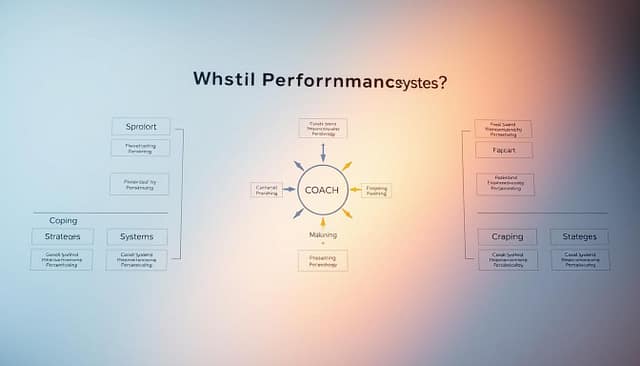
Coping Strategies and Support Systems
In Texas baseball, coping isn’t about hoping the pressure goes away. It’s about building a mental fortress, brick by brick. The difference between a team that cracks and one that contends often boils down to one thing: a mental operating system. This is where coach psychology becomes essential field equipment.
Experts like Brian Cain provide the blueprints for turning pressure into performance. Concepts like the “10 Pillars of Mental Performance Mastery” are key. For a coach, this isn’t abstract theory. It’s the playbook for the mind.
The first pillar, Elite Mindset, reframes the game. It’s not a magical trait you’re born with. It’s a trainable skill, like turning a double play.
How do you train it? Often, with a single sheet of paper. Cain’s “Most Valuable Paper” (MVP) strategy is a stroke of genius. It forces a player or coach to condense their mental approach onto one page. This document becomes the constant reminder of who they are when the crowd is loudest.
Pillars two and three, Motivation & Commitment and Focus & Awareness, tackle execution. Motivation is the spark that gets you to the ballpark. Commitment is the grit that keeps you there through tough times. The focus strategy is simple: compete one pitch at a time.
This is supported by powerful metaphor-based techniques. A favorite is teaching players to identify and drop their “bricks.” A brick is that heavy, lingering thought—a bad call from an umpire, a missed sign, a personal issue. The coach psychology trick is to have the player visualize pulling that brick from their back pocket and letting it thud to the ground.
The proof is in the dugouts of resilient programs. Coaches like Jim Schlossnagle have credited these mental frameworks for creating tougher teams. The support system isn’t a group hug after a loss. It’s a daily cultivation of cognitive skills.
So, when we talk about support systems, forget the soft pillow. Think of a reinforced steel beam. It’s the non-negotiable structure that holds everything up when the ground shakes. This strategic framework of coach psychology transforms external pressure into internal fuel. It doesn’t make the noise disappear. It just makes your team deaf to it.
Real Stories: Coaches Who Thrived Under Pressure
The preseason poll said sixth place. The Aggie faithful whispered doubts. For Jim Schlossnagle, that wasn’t a prediction; it was raw material. This is where the academic theory of coping meets the gritty laboratory of Texas college sports.
The coaches who don’t just survive but thrive understand a fundamental truth: pressure isn’t an obstacle to navigate. It’s the anvil on which a team’s identity is forged.
The Schlossnagle Symphony
When Schlossnagle arrived at Texas A&M, the external expectations were a polite suggestion to start planning for next year. Sixth in the brutal SEC West? Please. Instead of letting that noise become a distraction, he weaponized it.
He implemented a structured mental performance regimen, treating the mind with the same disciplined focus as a fastball or a swing.
The result was a masterclass in recalibration. The Aggies didn’t just quiet the noise; they orchestrated a symphony, finishing second in the division and grabbing a national seed. The pressure of low expectations became the very fuel for exceeding them.
It was a sage move: using external doubt to forge an unshakeable internal identity.
Recruiting’s High-Stakes Vision
Now, shift from the dugout to the backroads. The pressure to find talent—the next diamond in the rough—is its own unique beast. It’s a high-stakes vision test. Dan Fitzgerald felt it scouting in Iowa, watching a kid named Scott Schebler launch two massive home runs.
In that moment, the pressure to “find someone” crystallized into pure, clear focus. He just knew. That wasn’t luck; it was pressure sharpening perception. Schebler, of course, became a big leaguer. Stories like Pat Hallmark identifying Jon Duplantier aren’t flukes either.
They are case studies in how calibrated pressure can eliminate the static, allowing a coach’s instinct and eye to operate with laser precision.
The Alchemist’s Origin Story
Perhaps the most profound lesson comes from the teacher himself, Brian Cain. His origin story is the ultimate blueprint for alchemizing pressure. He arrived at the University of Vermont as a pitcher, brimming with promise. He left, by his own admission, a “miserable failure.”
That crushing pressure to perform, and the spectacular failure to meet it, didn’t break him. It became his purpose. He deconstructed his own mental missteps, studied performance psychology, and rebuilt himself not as a player, but as a guide.
The man who couldn’t handle the pressure on the mound in Vermont became the mental performance coach guiding teams to the College World Series. His entire philosophy was born in the fire of his own unmet expectations. He learned to turn leaden disappointment into golden insight.
These narratives—Schlossnagle’s defiance, the scout’s crystallized vision, Cain’s transformation—form a singular thesis. In the high-stakes arena of Texas college sports, pressure is the relentless, essential ingredient. The greats don’t hide from it. They learn its language and write their own legacy with it.
High-Stakes Games and the Making of Legends
Brian Cain, a mental performance guru, sees a key difference between winners and legends. This difference shows up in big games, like the ninth inning of a region final. Teams that were once bold start to play it safe, fearing failure more than success.
This shift from “playing to win” to “playing not to lose” is critical. It’s the line between winning championships and going home early. Vanderbilt and Oregon State didn’t just avoid pressure; they used it to their advantage.

In Texas, the stakes are enormous. A conference tournament is more than just a game; it’s a part of the state’s sports history. The pressure is like the weather, thick and palpable before the game starts.
Legends are made by those who face pressure head-on. They focus on one pitch at a time, even in the ninth inning. The crowd’s roar becomes their motivation, not a distraction.
The NCAA postseason is a test of both skill and character. The College World Series in Omaha is the ultimate test of managing pressure. It’s where mental toughness is put to the test.
What makes a game memorable? It’s not just talent. It’s how a team handles the pressure before the game even starts. Mental preparation is key, installing the right mindset for high-pressure situations.
Making a legend is like alchemy. It turns pressure into fuel. In Texas, where baseball is a religion, a legacy is built on how you perform under pressure.
True managing pressure in college athletics is about focus and using tension to your advantage. The next Texas baseball legend won’t shy away from the storm. They’ll navigate it with skill and determination.
Mental Health for Coaches
Let’s stop the inspirational music for a moment. We need to talk about the coach’s brain. It’s the most overworked, under-maintained part of the program. Coaches are expected to be calm and wise, but they face constant stress.
This stress shows up in quiet, harsh ways. Scott Forbes can’t sleep, haunted by Carson Fulmer’s choice. Pat Hallmark watches Alex Bregman’s success from afar. These are personal demons, a form of performance anxiety that lingers long after the game.
This is a big blind spot. The model praises hard work but ignores the mental toll. Experts like Brian Cain show how the traits of a great competitor can harm a coach.
So, managing your coach psychology is key. You can’t help your team if you’re empty inside. Performance psychology offers tools to improve mental fitness.
Coaches who take care of themselves set a strong example. They show players that it’s okay to ask for help. This builds a culture of honesty and strength.
The real score is not just about winning. It’s about the coach’s well-being. Investing in coach psychology keeps the program strong. Ignoring it is a bad strategy.
Advice for Young Coaches/Players
Think of pressure as the price to play the game you love. For young coaches and players, this is a key mindset shift. It’s all about learning to handle pressure in college baseball.
Brian Cain’s “10 Pillars” system is a real guide. It’s like a blueprint for a high-performance mind. The main idea is that you can train your mind to handle stress and stay focused.
Cole Winn and Josh Jung show us how it works. They learned early to manage their minds. This means building your mental skills before you need them.
For coaches, your role is changing. It’s not just about winning games. It’s about developing players. This takes patience and a focus on the process, not just results.
Here’s the key to success:
- Embrace the “Sophomore Mindset”: Cole Winn’s approach is to always learn and grow. Seek out mental challenges.
- Process is the Product: Focus on the daily habits and preparation. The outcome is secondary.
- Release the Last Pitch: Forget past mistakes and move forward. This is essential for success.
- View Pressure as Privilege: See the stress as a sign you’re playing at a high level. It’s a privilege, not a burden.
This advice is not just for college sports. It’s about taking control of your own game. Build a strong routine and trust the process. This way, you can handle any pressure that comes your way.
The last piece of advice is simple yet deep. Stop chasing results and focus on building a strong foundation. The pressure will always be there, but you can learn to manage it.
Conclusion
We’re back in that Texas ballpark. The lights are bright, and the crowd is loud. The air is thick with expectation, like a fastball ready to be hit. This is the constant state of play.
The world of pressure Texas college sports never stops. Brian Cain’s words are more true than ever: the game is mostly mental. Performance anxiety isn’t a weakness; it’s the shadow of high achievement.
The smartest coaches and players in Texas face this shadow head-on. They have a plan, and they’re ready.
Managing this pressure is key in today’s game. It’s about building a strong mental game, as solid as a pitcher’s arm. This means seeing the pressure Texas college sports brings and training the mind to handle it.
The wise know the secret. The pressure is just the cost of playing for something real. Champions pay this price with focus, not their well-being. They turn performance anxiety into the fuel for their legend.