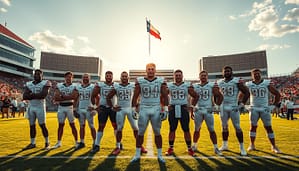
Forget oil barons and political titans. The real power lab in Texas is the baseball field.
Under the scorching sun, coaches do more than teach hitting. They build leaders.
This isn’t just about picking the best hitter for a “C”. It’s a careful, sometimes tricky process. They aim to create a leader in every player.
Is the old team captain model outdated? Or is Texas baseball reinventing it with a new approach?
Some teams follow a team-oriented leadership model. Everyone shares the responsibility. Others use new psychological tools to enhance the traditional role.
Let’s dive into the details.
Identifying team captains
Finding a team captain in Texas isn’t about the loudest voice. It’s about finding the most meaningful one. It’s about character, not just stats.
Some teams, like Carrollton Creekview, don’t pick captains. They believe every player should lead in their own way. This approach shifts from one leader to everyone leading together.
Other teams have a “Captain’s Council” to choose leaders. They look for those who serve, not just command. This way, everyone’s skills are valued.
So, where do you find leaders? They’re not always obvious. It’s the quiet one who leads by example. It’s the bench player who energizes the team. It’s the young player who knows how to bring everyone together.
What makes a leader? Look for these traits:
- Coachable Mindset: They’re eager to learn, not just know.
- Intrinsic Motivation: They’re driven by hard work, not just fame.
- Relational Intelligence: They know how to connect and help others.
Identifying future team captains means watching how they act when no one’s watching. Who helps out when it’s not their turn? Who leads by example in practice?
The old way focused on stars. The new way values those who build the team’s culture. In Texas baseball, the best captains are those who make everyone feel included and valued.
Leadership Training and Workshops
The old days of just calling someone a leader are gone. Player leadership is something you teach, not just give a title. It’s like preparing a pitcher for the mound, not just throwing him out there.
Today, we have real programs that teach leadership. They use a Captain’s Council to turn leaders into skilled players. This isn’t a quick fix; it’s a long-term effort with many steps.
The first meeting sets the stage, avoiding clichés. It introduces the idea of the servant leader. Leaders earn trust by putting the team first, not just giving orders.
Then, the team is split into smaller groups. Each group has a leader, making sure everyone has a say. It’s like a small team within the team.

The heart of the program is the weekly council meeting. These meetings are as important as practice. They’re where tough talks and planning happen.
This method fits perfectly with the “Coaching for Leadership” approach. Coaches become teachers, not just coaches. They create scenarios for learning, not just giving answers.
The lessons are real and practical. Captains learn how to solve problems and communicate well. They also learn to hold their peers accountable without causing trouble.
This training is not just in class. It happens everywhere, like in the dugout or on the bus. Coaches give feedback on the spot, making mistakes into learning chances.
In the end, a captain is more than just a title. They are a true leader, ready to help the team. Player leadership becomes a real strategy when taught right.
On-Field and Off-Field Responsibilities
Coach mentorship in Texas doesn’t just create better players; it engineers multi-tasking leaders who juggle game-day firefights with off-day diplomacy. Being a captain today is like being a startup CEO. You’re the team’s culture builder and communications director. Your role is split into two main areas.
On the field, you’re the coach’s right-hand person. It’s not about yelling orders. It’s about knowing the game’s flow. You call urgent meetings and settle the team with a glance.
Your main tool is trust, built in practice and used in real-time. You make key decisions and translate the coach’s plans into actions. You’re the link between the coach and the players.
The real challenge is off the field. Here, the coach mentorship model in Texas really shines. The coach becomes a mentor, letting captains handle the tough stuff. This lets the team focus on winning.
What’s the tough stuff? It’s the “daily opportunities” the Captain’s Council tackles. It’s peer-led film sessions and community service. It’s managing social media and supporting teammates.
Captains act as problem solvers, not just leaders. They help teammates in slumps and enforce rules without being strict. They keep the team together, day by day.
To see the full scope, let’s break it down. This table isn’t exhaustive, but it highlights the bifurcated nature of the role.
| Responsibility Arena | Specific Duty | Intended Outcome |
|---|---|---|
| On-Field Leadership | Act as on-field strategist & emotional stabilizer; call mound meetings; communicate coach’s signals. | Maintain tactical execution and team composure under pressure during play. |
| Team Culture & Morale | Organize player-led activities; conduct peer check-ins; mediate minor disputes. | Foster a cohesive, self-policing team environment built on mutual respect. |
| Program Stewardship | Oversee dugout/ locker room standards; lead community service projects; represent team publicly. | Uphold the program’s reputation and instill pride beyond win-loss records. |
| Player Development Conduit | Serve as a liaison for struggling players; facilitate peer-to-peer skill sessions; relay team feedback to coaches. | Accelerate individual growth and ensure no teammate falls through the cracks. |
This structure is a delegation of trust. The coach mentors by stepping back, creating space for the captain to lead. The captain learns to prioritize and lead by listening, not lecturing.
A Texas captain is more than a player with a “C” on their jersey. They are team psychologists. They manage egos, anticipate conflicts, and build unity. The field is where they apply their lessons. But the team is where they do their most vital work. The coach mentorship Texas model understands this deeply. It produces leaders who are as comfortable resolving conflicts as they are making plays.
Quotes From Texas Coaches and Captains
The debate over leadership isn’t just in books; it’s real in Texas sports. You see two clear views. Coach Matt Schell believes in everyone leading together. He says, “We try to establish a dynamic that we are all exactly the same… Our captains are pretty much our entire team.” He sees leadership as something everyone shares.
On the other side, some coaches prefer a structured approach. Coby Beckner, a Texas State Champion basketball coach, likes a Captain’s Council system. He says it’s “Excellent content! No fluff. To the point. Real depth on topic of developing leaders. Highly recommend.” Another coach calls it “tangible actionable items.” This shows it’s a method that works.
These quotes show a clear change. The focus is now on concrete, executable processes. Whether it’s “everyone leads” or “we train our selected few,” the goal is clear. It’s about growth, not just titles.
The old days of passive team captains are gone. Today, leadership needs a plan. It’s not just about wearing an armband. For more on this shift, check out coaches’ post-practice insights. They show how leaders are made with purpose, not by chance.
Impact on Game Outcomes
Does player leadership really lead to more wins? Or is it just something nice to say at the end of the season? The truth is, it’s a game-changer.
Coaches in Texas say that having a player leadership system makes a big difference. They say it boosts leadership and player responsibility. This sense of ownership leads to better teamwork and more wins, even in close games.
A player-led team is strong and can handle tough situations. They don’t wait for someone else to save the day. Instead, they work together and stay focused, turning losses into wins.
The impact isn’t always about big plays. Often, it’s about avoiding mistakes and staying focused. These small things can make a big difference in winning championships.
Players who fight for a shared vision are more committed. This vision isn’t just from the coach; it’s something the players helped create. This makes the team stronger and more successful.
The scoreboard is the ultimate judge. In Texas, where baseball is a big deal, teams that focus on leadership tend to win more. Leadership isn’t just a soft skill; it’s a key advantage.
Alumni Captain Successes
Forget the trophy case; the real proof of coach mentorship in Texas is in the office lobbies of successful alumni. The real scoreboard isn’t the one lit up on Friday nights. It’s the LinkedIn profiles, small business openings, and community initiatives launched years later.
Coach Schell knew what he was doing. He aimed to prepare players for the “real world.” Leadership isn’t just about sports; it’s about life. The diamond is a lab for learning.

So, what does the alumni data show? It’s not just about minor league managers. It’s about entrepreneurs, teachers, and non-profit directors who learned valuable skills from their time on the field. These are the real wins.
This transformation shows the true art of Texas coach mentorship. Coaches become life-stage mentors, not just sports instructors. The captaincy is like an MBA in human dynamics, learned with dirty pants.
Tracking alumni success is not just about pride. It’s a quality check. It shows that the skills learned on the field—communication, accountability, motivation—are useful in life. The investment in a captain pays off long after they retire. The legacy of this coach mentorship Texas philosophy lasts a lifetime.
Building a Leadership Pipeline
If your team’s culture falls apart when a senior captain leaves, you’re facing a crisis. Real Texas baseball programs don’t just rebuild; they reload. They focus on leadership with the same efficiency.
Leadership droughts are unacceptable. Relying on a natural-born leader is a path to mediocrity. The answer is a pipeline.
Creating a Captain’s Council is key. It’s not just for the starting nine. It’s a system to train the next leaders.
Underclassmen don’t just watch. They participate in strategy meetings and handle responsibilities. They learn leadership by doing.
Think of it as a succession plan for a Fortune 500 company. The pipeline keeps the team’s values and standards alive. It makes the culture stronger, not weaker.
Culture becomes something players own and carry forward. A sophomore who’s been on the Council knows what it means to hustle. He’s already teaching it to freshmen.
The aim is not to find the next superstar team captain. It’s to fill the gap left by graduates with players ready to lead. This ensures a smooth transition.
This pipeline makes sure every player can set a standard. When challenges arise, you have a united team. It’s not just one leader; it’s a team effort.
A healthy program is not just about winning. It’s about the constant flow of leadership. The best team captains are made, not born. They’re ready to lead when needed.
Conclusion
The old way of picking a team captain is outdated. Just choosing the star senior and expecting him to lead? That’s not enough anymore. Today’s game needs a smarter approach.
Real leadership isn’t just a title; it’s a skill you develop. In Texas, teams are moving away from just naming a captain. They’re focusing on building leadership skills through workshops and councils. They see captaincy as a role that requires training, not just popularity.
This change calls for a new kind of coaching in Texas. Coaches now act as both strategists and life coaches. They help with tough talks and show how to handle emotions. This effort benefits the team and the players in many ways.
On the field, teams stay strong even when the game is close. Off the field, players learn valuable life skills. The focus is on building people, not just winning games.
So, what’s the outcome? Creating captains is about making them, not just finding them. In Texas, where baseball is a big deal, this approach might be the most important strategy of all.