Imagine Kevin O’Sullivan standing in Gainesville, looking out at a field of top talent. His sport is thriving, with record viewership and quick paths to the majors. Yet, he seems worried, like he’s missing his favorite ice cream.
For Texas college baseball coaches, the main challenge is the system itself. They control their game but feel powerless against football and basketball’s influence. It’s a strange kind of power, where they can decide on a bunt but not on the game’s future.
O’Sullivan’s words sum it up: “I don’t know why they’re trying to take that away from us.” Jim Schlossnagle also feels stuck, facing “a split in the road.” This is the heart of modern coaching. You’re winning, but you’re also fighting to keep the game’s direction from changing.
This isn’t just an intro. It’s a statement on survival through quick thinking. It’s about excelling in a game where the rules are made by someone who doesn’t understand baseball. The real battle isn’t just on the field; it’s in managing the transfer landscape and the whims of a giant that often forgets baseball is part of it.
So, how do you succeed when you’re not sure you’re the main character? You evolve and adapt. But calling this adaptability is like calling a hurricane a gentle breeze. This is the intense game of modern college baseball.
New Rules and Their Impact
The NCAA’s new rulebook is more like a corporate plan than a sports guide. It focuses on cutting down team sizes from 40 to 34 players. The twist? Coaches must make these cuts by December 1st.
This isn’t just cleaning up. It’s chaos in the middle of the year. Over 1,200 players will flood the transfer portal, losing their spring eligibility. It’s like building a team for the fall, then tearing it apart before it starts.
So, why create such a rule? It’s about money. The $2.8 billion antitrust settlement and super-conferences have changed the game. Baseball often gets less funding, so roster cuts help control costs.
Mississippi State’s Chris Lemonis and Southern Miss’s Christian Ostrander worry about fewer chances for players. This rule is a way to cut costs, making it a key factor in the game.
How do you keep team chemistry with 15% of your team gone? Building depth with fewer players is a challenge. Coaches must be creative to succeed.
This rule changes how coaches recruit and develop players. Every scholarship offer is more important. You’re not just looking for talent for October; you’re planning for December.
This rule pushes for smarter team building. It’s a financial decision that leads to coaching innovation. It’s a tough rule that encourages creative solutions.
Coaches now need to be analysts, psychologists, and CFOs. The game is tied to numbers off the field. Adapting means changing your whole approach.
True coaching innovation comes from responding to tough rules. The rulebook takes away, but the best coaches will find a way to build something great with what’s left.
Evolving Training Methods
Walk into a top-tier Texas college baseball facility today, and you’re less likely to smell pine tar and leather than you are to hear the hum of servers processing terabytes of biomechanical data. The dusty field of dreams has been annexed by a clean room of data streams. This is the new laboratory where the game’s tactical changes are engineered, not just intuited.
Gone are the days of coaching by gut and gumption. The modern toolkit reads like a tech startup’s inventory. A Rapsodo unit tracks a pitch’s spin rate and axis with the precision of a missile guidance system. A Blast Motion sensor attached to a bat dissects a swing’s every micro-movement, from hand path to rotational acceleration. Then there’s HitTrax, turning a batting cage into a simulated Major League park, where hitters can work counts against digital Clayton Kershaws.
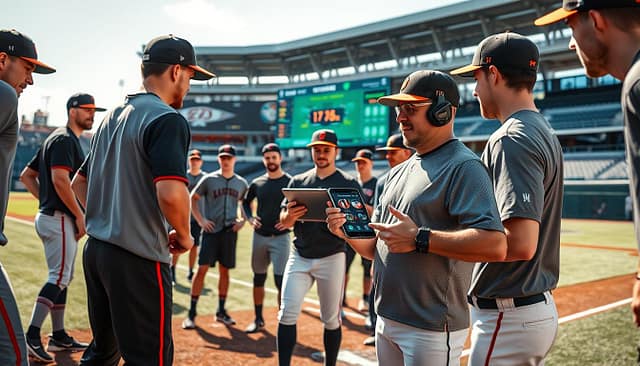
But here’s the savvy part of the evolution. The smartest coaches—the Sages of the dugout—saw a problem. The “showcase industrial complex” was creating a generation of radar gun heroes and exit velocity monsters who couldn’t run a basic first-and-third play. The data was spectacular, but the baseball IQ was anemic.
The real tactical change isn’t the adoption of tech. It’s the philosophical pivot back to foundational skills, using that tech as a means to an end. Why obsess over a 95-mph fastball if the pitcher has no clue how to hold a runner on? Why marvel at a 400-foot bomb if the hitter freezes on a sacrifice bunt sign? The metrics became a starting point for a deeper conversation about playing complete baseball.
This is where frameworks like USA Baseball’s Long-Term Athlete Development (LTAD) Plan get dusted off and actually used. It’s no longer a pamphlet on an athletic director’s shelf. For the evolving coach, it’s a blueprint. It mandates building athletes, not just showcases. It insists that physical literacy and game understanding come before optimizing a slider’s gyro spin.
So, what does training look like now? It’s hyper-individualized. A pitcher’s Rapsodo data doesn’t just tell a coach he has a good curveball. It starts a dialogue: “Your curve has elite vertical break. Now, let’s use that to set up your fastball in different counts, and by the way, here’s how you field your position after the throw.” The Blast sensor doesn’t just flag a bat drag; it helps design a drill regimen unique to that hitter’s kinetic chain.
The evolution is complete. Training has moved from the artisanal, one-size-fits-all fungos to an algorithmic, personalized development plan. The true change is the blend. It’s the marriage of Rapsodo’s cold, hard data with the timeless, warm-blooded savviness of knowing how to win. The tools are futuristic, but the mission is classic: build ballplayers.
Case Studies: Coaches Who Changed Mid-Career
How does a veteran coach adapt to a digital world? It’s a story of practical change. You earn a statue for knowing when to change, not for sticking to old ways.
Jim Schlossnagle’s career shows the sport’s big changes. He’s dealt with conference shifts, scholarship cuts, and rule changes. He says coaches are great at adapting, which is true.
This adaptability in college baseball is tested in places like North Texas. The rules and players keep changing. Even what a “team” is has changed.
Imagine a coach who used to build relationships through recruiting. Now, they face a fast-paced market. Their old ways don’t work anymore. They need to learn new strategies every day.
Coaches also face a big tech leap. They used to learn from VHS tapes. Now, they use 3D motion capture data. This change is both technical and cultural.
The key to success? A 55-year-old coach working with a 25-year-old data analyst. It shows humility and a desire to learn. They know the game has changed and they need to adapt.
This idea of changing careers isn’t just for sports. People in all fields need to update their skills. Mid-career coaching helps with this by checking your skills, learning new tools, and letting go of old ways.
Today’s successful Texas college baseball coaches are all about adapting. They focus on the game’s new aspects, like spin rates and launch angles. Their stories are about smartly adopting new ways, not just sticking to old ones.
The main lesson? Survival is about being flexible. The ability to change your approach, even after years, is key. The game evolves, and coaches who adapt are the ones who succeed.
Collaboration With Sports Scientists
Forget the radar gun for a second. The real coaching innovation is happening in a collaboration that sounds more like a lab meeting than a bullpen session. The most critical new hire on a Texas college staff might just be the biomechanist with a PhD, not the pitching coach with a World Series ring.
This partnership isn’t just about velocity. It’s about workload management, injury prevention, and optimizing recovery. It’s the difference between a coach’s gut feeling that “his arm looks tired” and a data sheet showing a 5% decrease in shoulder external rotation. That’s the power of sports science.

The model is a perfect synthesis. The coach brings the baseball intuition, the relational touch, and the feel for the game. The scientist provides the cold, hard, empirical evidence. Together, they don’t just guess; they know.
This philosophy rejects the quick fix. It embraces the marathon. Think of the Driveline Baseball approach, which prioritizes “life-changing” improvements over 12+ months. It’s Moneyball for the body itself, focusing on sustained, data-informed development cycles instead of weekly miracles.
The tools are getting smarter, too. We’re talking about AI-powered analytics platforms like Hudl and virtual coaching systems that turn qualitative observations into quantitative plans. This tech creates a continuous feedback loop, turning every pitch and swing into a data point.
The ultimate goal? To prevent the next Tommy John epidemic. Not with old-school rest and hope, but with predictive algorithms that flag a pitcher’s risk before his elbow ever twinges. It’s proactive, not reactive.
The sage coach doesn’t fear this data deluge. He synthesizes it. He becomes the essential translator, converting the language of lactate thresholds and spin efficiency into language his players understand: winning, health, and a longer career.
Embracing Tech and Player Feedback
Forget chalkboard talks; today’s tactical changes are planned on tablets before the game starts. The clipboard, once a symbol of authority, is now outdated. It’s been replaced by a whole new way of communicating.
This change isn’t just about new tools. It’s about creating a feedback loop. Tools like GameChanger, TeamSnap, and LeagueApps make game-day planning and analysis easy and fast. Coaches can check pitch speed and swing mechanics right away. This makes strategy a live, not just a post-game, thing.
The real change is in how we share information. With everyone having access to analytics on their phones, coaches are no longer the only ones with the answers. It’s a shift from one-way communication to a shared data stream.
This new setup creates a strong partnership between coaches and players. For example, when a hitter is struggling, the coach can point out specific issues. “Your Blast Motion data shows your swing path is dropping 4 degrees early. Let’s watch the video and solve this together.” It turns tactical changes into a team effort.
This digital world also changes how teams communicate. Private Facebook groups are now where teams share updates, news, and motivation. It’s fast and open, making it hard for coaches to hide. They must be transparent and quick to respond.
The message is clear: using this tech doesn’t undermine a coach’s role. It’s a tool for creating a more informed, engaged team. A coach who uses it well doesn’t just manage players; they build a team culture. Every tactical change is supported by data, every adjustment is a discussion, and every player feels involved. That’s how you succeed in today’s game.
Overcoming Resistance to Change
The most interesting form of adaptability in Texas college baseball isn’t about new drills. It’s about knowing when to say no. Evolving with the game doesn’t mean agreeing with every new rule.
The roster limit controversy sparked strong reactions. Florida’s Kevin O’Sullivan called it “irrelevant.” Mississippi State’s Chris Lemonis found it “disappointing.” Southern Miss’s Christian Ostrander asked, “Who does that help?” This isn’t just saying no; it’s standing up for what’s right.
Coaches resist on two main points. First, they stand on moral grounds. They say it’s about “taking opportunities away from kids.” Second, they question the logic behind the change. When does accepting a broken system become wrong?
This kind of adaptability is different. It’s not about changing your game plan. It’s about defending the sport’s soul. These coaches are evolving by fighting the change, not just accepting it. Their motto isn’t “adapt or die.” It’s “adapt and defy.”
Overcoming resistance to change isn’t always about internal struggles. Sometimes, it’s about using arguments, data, and public opinion to resist harmful changes. It’s adaptability with courage. In college baseball, knowing when to fight shows you’re truly in the game.
Successes and Failures
The world of Texas baseball coaching is filled with wins and losses. It’s also a place of bold experiments and their results. Each season is a chance to learn through coaching innovation.
Wins are important. The use of Post-Graduate programs is a great example. These programs started as a gap-year idea but have become a real bridge to college baseball. They help players who need more time to develop.
The “Futures” model is another success. It’s not just a summer league but a way to develop talent. It finds players early and helps them move smoothly into college.
But, there are also failures. Sometimes, coaches focus too much on data and forget about the team’s spirit. This can lead to a team that knows its stats but lacks teamwork.
Logistical mistakes can also happen. The transfer portal is a tool, not a strategy. Some coaches use it too much, losing the team’s chemistry. They forget that trust is key.
Burnout is another issue. The constant need to adapt can exhaust coaches. They might make hasty decisions or forget the basics of the game.
So, what’s the lesson? Success in Texas baseball isn’t just about winning. It’s about managing risks and learning from mistakes. Coaches should try new things but also stick with what works. They should always be ready to learn from their failures.
Conclusion
So, what’s the final score for the modern Texas college baseball coach? The job description has changed forever. It’s not just about making lineup cards and giving pep talks anymore. It’s a constant balancing act between old traditions and new data-driven methods.
Adapting is not optional; it’s a must. Coaches need to mix their instincts with data, old drills with sports science. These changes are not just temporary. The way they prepare and make decisions during games is now the core of their job. The old-school fans might resist, but the data experts are leading the way.
Jim Schlossnagle’s “split in the road” is not just a one-time choice. It’s the ongoing path. Success goes to those who keep updating the playbook, one feedback session at a time.
The main lesson is one of hope and constant learning. The game is in great shape. Texas coaches have learned to embrace change as their only constant. That’s how they build lasting legacies.