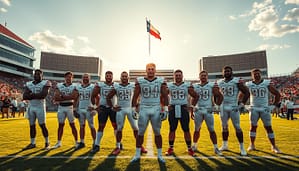
Welcome to the excitement of game day! Ever felt the thrill in a stadium? That energy isn’t just from the game. It comes from the fans.
We’re exploring what makes a college game special. It’s the united cheers, the synchronized actions, and the time-honored customs. These traditions turn a crowd into a close family.
These traditions are rooted in deep passion and respect. For instance, at Texas A&M, Hannah Wimberly shares the importance of long-standing traditions. The University of Texas also has its own special game-day rituals.
By the end of this tour, you’ll grasp the magic of these moments. You’ll also learn how to bring that energy to your cheering group!
What makes a great student section: timing, positivity, creativity
Great student sections don’t happen by accident. They are built on game day customs and fan etiquette. Hannah Wimberly said it’s about passion, enthusiasm, and a lot of Good Bull. This positive spirit is what defines Texas college baseball support.
Let’s break down the three essential ingredients for a legendary student section:
- Perfect Timing
- Unwavering Positivity
- Boundless Creativity
Timing is everything. A great section isn’t just loud; it’s smart. It knows when to erupt, creating a sound wall that disrupts concentration. It also knows when to be silent, letting players focus.
Positivity is your superpower. Being the “12th man” means lifting your team up, even when the scoreboard isn’t in your favor. This is where true fan etiquette shines. Keep heckling respectful and focused on the play, not personal. Your role is to be an unwavering source of energy for your team.
Creativity makes you unforgettable. This is how traditions are born. Invent a new chant or organize a visual display with colored cards. Show up in themed outfits to turn your section into a sea of school spirit. These creative game day customs become uniquely yours and add fun and identity that opponents remember.
When you master timing, positivity, and creativity, you create the ultimate atmosphere. It’s intimidating for the visiting team because the support is so clever and unified. Yet, it’s incredibly welcoming for your own players and fellow fans. That’s the beautiful balance of great fan etiquette – building up your side without tearing others down.
Now you know the blueprint. It’s about being loud, smart, and kind all at once. Let’s put these principles into action and make your student section the heartbeat of the ballpark!
Signature Rituals Across Texas Programs
Ever wondered what makes Texas college baseball so exciting? It’s the student section traditions each program has. These rituals turn a game into a community event. They mix school history, local culture, and fan creativity for an unforgettable experience.
Let’s look at the main parts: themed nights, creative props, and respectful heckling. Each school adds its own twist, making every game unique.
https://www.youtube.com/watch?v=2W9U-E6kZro
Theme nights are key for unity. The University of Texas Athletics page talks about “Orange Out,” where the stadium turns burnt orange. It’s not just about the color; it shows massive support that shakes opponents.
Texas A&M also loves its “Maroon Out” games, as superfan Hannah Wimberly shares. These events make everyone feel like part of the team with a simple rule: wear this, belong here.
Props With a Purpose
Props add fun to the game. Simple traditions, like waving something during the seventh-inning stretch, are stunning. Thousands of fans holding up small objects creates a powerful effect.
Common props include:
- Custom rally towels with game slogans.
- Foam fingers or pennants in school colors.
- Glow sticks or LED bracelets for night games, lighting up the stands.
These items are more than souvenirs; they’re tools for expressing unity.
The Art of the Respectful Heckle
Respectful heckling is a mix of creativity and sportsmanship. It’s good-natured teasing that never goes too far. For example, fans might research an opposing pitcher and create a chant based on it.
The best heckles are:
- Fact-based: (“We heard you hate lawn gnomes!”)
- Rhythmic and catchy: Easy for everyone to join in.
- Short-lived: Lasts for an at-bat or inning, then stops.
This keeps the game fun and focused, without being hostile.
How Rituals Reflect School Identity
Looking at different programs shows how student section traditions reflect each school’s culture. The University of Texas often uses “The Eyes of Texas” in mid-inning rituals, showing its history.
Texas A&M’s traditions, like those mentioned by Wimberly, reflect the “12th Man” spirit. Their chants are precise and echo the school’s corps of cadets heritage.
Smaller schools have unique traditions that highlight local pride or inside jokes. These make their section feel like a close family.
These rituals do more than entertain. They build a shared identity, intimidate opponents, and create lasting memories. Next time you’re in the stands, remember, you’re living a tradition.
Band and DJ coordination: tempo maps and inning cues
The perfect moment from silence to cheer isn’t luck. It’s thanks to ‘inning cues’ and a ‘tempo map’. This secret symphony between the pep band, DJ, and leaders turns energy into momentum.
Think of the game as a musical journey. A tempo map is the soundtrack that matches the game’s emotions. It’s not just random music!

The game starts with upbeat tunes to get everyone excited. As it gets intense, the music gets more driving. The pep band director and DJ know when to boost or calm the sound.
Inning cues are silent signals for action. A band member might nod to the student leader. A DJ might see a coach’s signal.
These cues tell everyone to start the fight song or start the heckle. This coordination makes the crowd act as one, not scattered.
Here’s how the key players work together:
- The Pep Band Conductor: Sets the musical tone and follows the tempo map. They anchor the stadium’s sound.
- The DJ: Fills gaps with modern tracks, boosts key moments, and supports the band’s energy.
- Student Section Leaders: Translate musical energy into chants and movements.
When these groups are in sync, the effect is clear. A drum roll during a pitching change raises tension. A sudden fight song after a home run boosts joy. This isn’t just background noise; it’s a strategic advantage.
Universities like Texas know this. Their game-day atmosphere relies on this teamwork. The result? A living, breathing soundtrack that shapes the game, not just follows it.
Theme‑night toolkit: blackout, throwback, fiesta, charity ties
Imagine the whole stands united by color, celebrating history, or supporting a cause. That’s the magic of a theme night. These events turn your section into a visual powerhouse. They capture the spirit of Texas college baseball, where connection is key.
Your theme-night toolkit is like a playbook. It turns game-day energy into a spectacular show. Each theme has its own goal. Your task is to pick the right one and execute it perfectly.
Let’s explore four proven theme nights that are game-changers.
Blackout: Everyone wears black. It’s simple yet powerful. A sea of black looks intimidating and unites everyone. It’s the ultimate sign of solidarity.
Throwback: Celebrate your program’s history. Wear vintage jerseys or gear to honor past legends. This theme connects current students with the team’s rich history. It builds pride across generations.
Fiesta: Bring vibrant color and energy! Think sombreros, serapes, and a festive vibe. This theme is a celebration of culture and fun. It lifts everyone’s spirits.
Charity Ties: Align your night with a local cause. Collect donations or promote awareness. This theme adds a deeper layer of meaning. It shows your section cares about more than just baseball.
| Theme Name | Core Idea | Key Props/Attire | Top Promotion Tip |
|---|---|---|---|
| Blackout | Unified, intimidating visual impact | Black shirts, hats, signs | Create a graphic with the date & “Wear Black” slogan. Share it everywhere. |
| Throwback | Honor team history and legends | Vintage jerseys, old photos, retro banners | Partner with the athletics department to share archival photos and stories on social media. |
| Fiesta | Vibrant, festive celebration of culture | Sombreros, colorful serapes, maracas | Use a catchy Spanish phrase as the event hashtag. Hand out small props at the gate. |
| Charity Ties | Support a cause to boost community spirit | Charity wristbands, donation buckets, info flyers | Feature the charity partner in all promotional materials. Explain how fans can contribute. |
Planning a successful theme night is more than a good idea. You need a solid plan. Get approval from the athletics department and security early.
Promotion is key. Use every channel you have. Post on social media, put up flyers, and make announcements at games. Create a clear, exciting message. Tell people exactly what to wear and why they should come.
Coordination is everything. Work with the game-day staff. Make sure your theme fits with any other stadium events. You can even tie your theme night into a broader university initiative.
To ensure maximum participation, make it easy. Give away themed items at the entrance. Recognize the best-dressed fans on the big screen. When students feel involved, they become your best promoters.
Remember, these nights create unforgettable memories. They strengthen the bond between the team and its fans. A great theme night turns a regular game into a must-see event. Now, go build your toolkit and paint the stands with spirit!
Accessibility & inclusion: captioning lyrics, sensory‑friendly zones
Inclusion is key in a modern student section. It turns loud cheers into a welcoming sound. True fan etiquette today means making sure everyone feels included. It’s about being loud and welcoming at the same time.
Imagine your section’s most complex chant. New students or first-time visitors might feel left out if they don’t know the words. A simple fix is to display the lyrics on the stadium video board! This turns a barrier into an invitation. Suddenly, everyone can learn and join in, making the tradition stronger.

For some fans, the game’s energy can be too much. Creating a sensory-friendly zone is a big help. This area has less noise and lights, letting fans with sensitivities enjoy the game their way. It shows respect and care for all fans.
Real inclusion also means making things affordable. A legendary student section shouldn’t be expensive. That’s why it’s important to fight for affordable student tickets. Resources like this guide on finding cheap seats show how cost can be a big problem. By keeping ticket prices low, you make the tradition accessible to all students, not just a few.
Let’s break down these inclusive actions into a simple toolkit:
- Caption Key Chants: Work with game operations to show lyrics on the big screen during the 3rd or 7th inning.
- Map a Quiet Zone: Find a stadium section (like the upper deck behind home plate) for a sensory-friendly area. Promote it on social media and at the gate.
- Champion Affordable Tickets: Start a student petition for discounted season passes or group rates. Say it’s for a bigger, louder home-field advantage.
When you add these practices to your section’s culture, you do more than just follow rules. You build a stronger, more united community. Your fan etiquette becomes your identity. You’re cheering for the team and for each other. And that’s a tradition worth keeping.
Measuring impact: noise maps, opponent errors, crowd‑energy surveys
Game day customs are fun, but their real magic is in the measurable effect they have on the field. How do you know if your cheers are actually getting inside the opponent’s head or firing up your own team? You need data! By measuring your impact, you move from hoping you’re helping to knowing you’re making a difference.
Let’s break down three powerful ways to track your student section’s influence. Think of them as your energy report card. We’ll look at noise levels, opponent mistakes, and fan morale.
First up: noise maps. Your volume is a weapon, but where is it loudest? Free sound meter apps on your phone can help you create a “noise map” of your section. Take readings during key moments—a two-strike count, a rally, a big defensive play. You’ll discover your peak decibel zones. This isn’t just for bragging rights. You can show your athletics department exactly when and where your game day customs create the most intimidating atmosphere.
Next, watch the other team closely. This is where your energy pays off in the scorebook. Assign a few section members to track observable reactions. Did the pitcher shake off a sign after a loud chant? Did the batter step out during your noise peak? More concretely, note any errors, wild pitches, or called timeouts that immediately follow your biggest roars. This direct correlation is powerful proof your traditions have tangible consequences.
Lastly, look inward. How is the energy within your section? A quick digital survey sent after the game takes just minutes. Ask simple questions: “On a scale of 1-10, how pumped was the crowd in the 7th inning?” or “Which chant felt most effective today?” This feedback helps you refine your best game day customs and drop the ones that don’t land.
| Metric | How to Measure | What It Tells You |
|---|---|---|
| Noise Map | Use a free sound meter app (like Decibel X) at timed intervals. Record location and game situation. | Identifies your loudest, most strategic moments. Proves your section’s ability to control the acoustic environment. |
| Opponent Reaction Tracking | Log observable behaviors: called timeouts, mound visits, errors, or pitch-clock violations following crowd peaks. | Provides direct evidence that your energy disrupts opponent focus and can lead to tangible game advantages. |
| Crowd-Energy Survey | Post-game digital poll (Google Form, etc.) with 3-5 questions about fan engagement and chant effectiveness. | Gauges internal morale and satisfaction. Shows which game day customs resonate most, guiding future planning. |
Armed with this data, you have a compelling story to tell. You’re not just asking for more support; you’re proving your worth with noise charts, error logs, and fan testimonials. Athletics departments respond to evidence. Showing the measurable impact of your game day customs is the best way to secure better seats, more props, or official recognition. Turn your passion into proof, and watch your influence grow!
Build‑your‑own tradition: approval steps with athletics and security
Want to start a new game day chant or ritual? Creating lasting traditions is a great way to make your mark. Just like Hannah Wimberly inspired Aggies to improve their university, your idea could become a favorite for future fans.
First, write down your idea. Is it a new song, a funny heckle, or a themed prop? Then, share it with your classmates and get their support. A widely supported idea is more likely to succeed.
Next, meet with the athletics department. Talk to the fan experience or marketing team. Show them how your idea will make games more exciting and fit with the program’s values. Be open to their suggestions.
Getting the final okay means working with stadium security. They’ll check if your idea is safe and works well. They want to ensure everyone has fun while staying safe.
With good planning and respect for the process, your tradition can get official approval. You’re not just making noise. You’re building pride and legacy for your school’s baseball fans.