Kyle Field Transportation is no side issue for Texas A&M football. It shapes how families reach College Station, how students move across campus, how visiting supporters enter the stadium area, and how quickly the 12th Man can settle into its role before kickoff. After Texas A&M opened its 2026 home football schedule against Missouri State on September 5, the revised traffic plan deserves a sports-first review, not just a parking note, because game-day access affects crowd timing, stadium energy and the wider Bryan-College Station community.
Why Kyle Field Transportation Became A Performance Issue
Kyle Field Transportation After The 2013 Alabama Strain
The current approach traces back to a hard lesson from the 2013 Texas A&M game against Alabama. Kyle Field seated about 88,000 fans that day, while roughly 35,000 more gathered outside the stadium area. Traffic congestion lasted many hours afterward, pushing the campus and local agencies toward a more structured plan. Texas A&M Transportation Institute published a September 3, 2026 planning update marking more than 10 years since the gameday plan was first rolled out in 2014, and it tied the work directly to that 2013 congestion problem TTI planning update.
For a football program built around one of the largest and loudest home environments in the state, that history matters. The Aggies do not just manage cars; they manage arrival waves. A crowd that gets trapped in postgame traffic for hours carries that memory into the next home date. A crowd that understands routes, shuttle timing and pedestrian space is more likely to arrive earlier, stay engaged and leave with less friction.
From Crowd Size To Flow Metrics
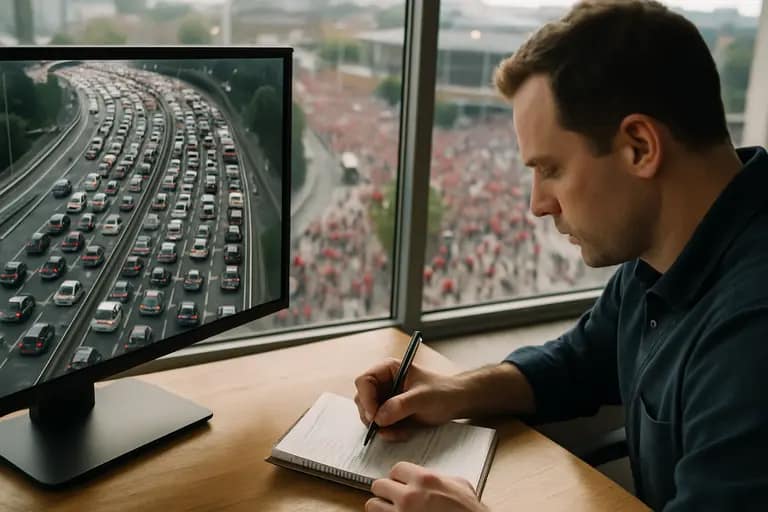
The stronger part of the plan is that Texas A&M has treated congestion as a measurable problem. The research notes state that after every home football event, TTI, Transportation Services and local government and public safety partners conduct after-action reviews. Those reviews analyze congestion across about 80 miles of roadways around campus, including where backups occurred and how long they lasted.
That kind of review mirrors how coaches evaluate film. One Saturday does not define the system, but repeated patterns expose weak points. If a garage exit creates a recurring conflict with pedestrians, that shows up. If one corridor clears faster because buses have a cleaner path, that becomes useful evidence. For Kyle Field Transportation, the performance metric is not yards per play; it is how safely and predictably people move before and after the game.
How The Revised Plan Separates Fan Movement
Pedestrians, Transit And Vehicles
The foundation of the gameday plan is separation. Texas A&M’s Mobility Division identifies core elements that include separating pedestrians, transit and vehicles, designating pedestrian corridors, setting dedicated transit routes and controlling vehicle travel paths to improve safety and traffic flow Mobility Division project page. That may sound like traffic engineering, but around Kyle Field it is also crowd management.
Football crowds do not move like weekday campus traffic. They arrive in compressed windows, often in family groups, with many fans unfamiliar with the latest garage or shuttle pattern. Students, former students, visiting fans and local residents all share the same streets around a stadium that draws statewide attention. Separating travel modes reduces the number of conflict points, especially near the highest-foot-traffic areas close to Kyle Field and Rudder Tower.
Digital Tools And The Cell-Service Problem
The Destination Aggieland mobile app remains a key part of the plan because it gives fans real-time maps, parking availability and travel guidance. The research notes also point to a practical limitation: cell service can be strained on game days, so fans are encouraged to download permits, take screenshots or use digital wallets before reaching the stadium area.
That detail is not minor. A digital permit that will not load at a garage entrance can slow an entire queue. A family trying to confirm a route while walking against a crowd can create hesitation at exactly the wrong spot. Fans who also use their phones for pregame information, including resources such as BetOnline sportsbook reviewed, have another reason to complete their digital preparation before approaching the stadium. The best transportation system still depends on fans doing some work before they leave home, especially for high-attendance SEC football dates in College Station.
What Changed In Kyle Field Transportation On September 5
Garage Routing And Shuttle Timing
For the September 5, 2026 opener against Missouri State, the research notes identified several operational changes. One was a new basement-level vehicle pathway in the West Campus Garage, located at the northeast corner via Reed Arena, designed to reduce conflicts between vehicles and pedestrians. Shuttles, both on campus and off campus, were scheduled to begin three hours before kickoff and continue until one hour after the game.
The West Campus Garage adjustment is exactly the type of small operational change that can produce a better stadium experience if it reduces merging, stopping and pedestrian interference. It also matters for fans using Reed Arena as a familiar landmark. A route that feels clear before the game can keep supporters from making late turns or crossing through walking traffic.
No Wheels Zones And Speed Limits
Home game-day controls also include pregame road closures that begin 4.5 hours before kickoff, or around 7:30 a.m. for morning games. The research notes state that No Wheels Zones around Kyle Field and Rudder Tower begin 3.5 hours before kickoff and run until one hour after the game ends. Those zones prohibit bikes, scooters, golf carts and similar wheeled movement inside the restricted area.
That rule is easy to criticize if viewed only through personal convenience. From a stadium-flow angle, it is more defensible. A scooter moving through dense foot traffic creates a different risk profile than a fan walking with the crowd. Around a packed football venue, predictable movement is safer movement. The 2026 reduction of speed limits across several campus thoroughfares fits the same logic: slower vehicle movement near heavy pedestrian activity reduces the chance that one bad merge or rushed turn disrupts the whole plan.
- Earlier road closures create cleaner setup time before peak fan arrival.
- No Wheels Zones reduce speed differences inside dense pedestrian areas.
- Shuttle windows give fans a defined option before and after the game.
- Digital permits help keep garage and lot entries moving when prepared in advance.
Why Congestion Data Matters To Aggie Football
Player Development Starts Before Kickoff
There is a player-development angle here that can be easy to miss. Coaches spend all week trying to control routine: meetings, meals, warmups and emotional timing. A chaotic stadium arrival pattern does not directly decide a third-down call, but it can affect the environment around the team. If fans reach seats late or enter frustrated, the early-game energy inside Kyle Field can feel different.
For younger players, especially those adjusting to SEC home atmospheres, crowd rhythm matters. A full student section before kickoff sends a different signal than a section still filling because nearby routes were clogged. The transportation plan is not part of the playbook, but it supports the setting in which the playbook is tested.
Community Review, Not One-Day Guesswork
The after-action review process also gives Bryan-College Station residents a stake in the system. Football Saturdays affect restaurants, hotels, neighborhoods, campus workers and public safety agencies. Measuring congestion over about 80 miles of roads keeps the review from focusing only on the stadium gates. It asks whether the plan worked for the surrounding community as well as the ticketed crowd.
That is where the 10-plus years of planning since 2014 become valuable. The best sign of progress is not the absence of traffic. A home football crowd of this size will always create pressure. The better question is whether agencies can identify repeat issues, test changes and explain those changes clearly enough that fans adjust their habits.
Why Kyle Field Transportation Shapes Aggie Game Days
Kyle Field Transportation will remain a weekly performance test whenever Texas A&M plays at home. The September 5 opener gave the revised system another real crowd environment, with shuttle timing, garage routing, pedestrian controls and digital permits all tied into the same goal: moving people safely without draining the energy that makes College Station distinctive on football Saturdays.
The most useful takeaway for Aggie fans is that traffic planning is now part of game preparation. Checking routes, saving permits before arrival and respecting No Wheels Zones are not just administrative chores. They help protect the stadium experience for students, alumni, families and local residents who share the same road network. For Texas A&M, the transportation plan is not separate from the football day. It is one of the systems that allows the 12th Man to show up on time, in force and ready to affect the game.