The Longhorns Returning Core was not just a preseason talking point for Texas baseball. By the time the completed 2026 season had taken shape, that group had become the clearest reason Texas had enough pitching stability, lineup carryover and clubhouse direction to make its run to the College World Series. For an Austin program adjusting under Jim Schlossnagle while competing in the SEC, the value was not abstract. It showed up in who took the ball, who stayed in the order and how often Texas could avoid building each weekend from scratch.
How The Longhorns Returning Core Set The Floor
Returning Innings Changed The Pitching Math
Texas entered 2026 with a rare amount of mound continuity for the modern college game. The Longhorns returned 16 letter-winners from their 2025 SEC Championship club, including 76 percent of innings pitched and 45 of 58 starts on the mound. That did not guarantee an Omaha trip, but it changed the starting point for the coaching staff. Schlossnagle and his assistants were not simply sorting through a staff full of untested arms; they had veterans who had already carried meaningful SEC innings.
That mattered in Austin because roster churn has become one of the defining pressures in college baseball. Programs can add talent through the portal, but innings that have already survived SEC lineups carry a different type of scouting value. The staff could make decisions based on actual Texas performance rather than only fall reports, prospect reputation or short midweek samples.
Why The Longhorns Returning Core Mattered On The Mound
The clearest example came from the graduate pitching trio of Luke Harrison, Ruger Riojas and Max Grubbs. Their return gave Texas older arms at the front of the staff, and their presence was framed locally as veteran experience rather than just roster names on a depth chart. Burnt Orange Nation described the returning Texas pitchers as bringing veteran experience to the staff, with Harrison, Riojas and Grubbs central to that discussion returning Texas pitchers. That is where the Longhorns Returning Core made its first major impact: it reduced the number of unknowns before SEC weekends began.
Pitching Continuity Turned Into Omaha Value
Veterans Gave Texas A Starting Point
Schlossnagle later tied Texas’ College World Series push to the staff’s ability to retain key arms. He said NIL helped Texas keep Harrison, Riojas and Grubbs, while Dylan Volantis moving into the full-time rotation was another major factor in making the Omaha run possible, according to Yahoo Sports’ report. That is a direct reflection of the modern roster equation in Austin: player development still matters, but retention has become part of development because the player has to stay long enough for the program to benefit from that growth.
Harrison’s 2025 workload made his return especially useful. In 15 starts that season, he threw 70.2 innings, posted a 3.07 ERA and led Texas starters in innings pitched. A left-hander with that type of previous usage gives a staff more than one night of value. He affects bullpen planning, opponent preparation and the way younger pitchers are asked to fit into the week.
Volantis Shifted The Ceiling
Dylan Volantis added a different layer. After being named national Freshman of the Year in 2025, he moved into a full-time rotation role during 2026 and produced a team-best 2.03 ERA across 16 appearances, including 15 starts, with a 10-1 record. That kind of jump changed Texas’ pitching profile from experienced to dangerous. A veteran-heavy staff can sometimes be steady without being overpowering; Volantis gave Texas a frontline performance track next to the older group.
By April 9, 2026, Volantis also led active Division I pitchers with a minimum of 75 innings in career ERA at 1.98 across 31 outings. In that span as a full-time starter, he was 4-0 with a 2.01 ERA. For a coaching staff, that combination of past production and current role clarity is a major planning advantage. Texas did not have to ask whether Volantis belonged in pressure spots. The completed 2026 season showed he could live there.
How Bats Around The Longhorns Returning Core Held Up
Mendoza And Rodriguez Gave The Lineup Memory
The offensive side had its own continuity. Ethan Mendoza and Adrian Rodriguez returned after leading the 2025 team in hitting. Mendoza hit .333 with five home runs and 35 RBIs in 2025, while Rodriguez slashed .313/.410/.516 with seven home runs, 23 RBIs and a share of the team lead with 15 stolen bases. Those numbers gave Texas more than two productive bats. They gave the lineup memory: hitters who knew how opponents attacked Texas, how SEC weekends were paced and how to handle the expectations that come with wearing burnt orange in Austin.
That type of return is easy to overlook because offensive continuity is less visible than a Friday starter. A lineup with experienced hitters can absorb slumps differently. It can win with a walk, a stolen base, a situational swing or a two-out extra-base hit because the players have already been through high-leverage college at-bats. The Longhorns Returning Core helped Texas keep that kind of offensive baseline across the 2026 season.
Tinney And Robbins Widened The Run-Creation Plan
Carson Tinney and Aiden Robbins gave the order more force. Tinney drew preseason attention on the Golden Spikes and catcher of the year watch lists, then backed up the profile with a .326/.483/.688 line. Robbins, a transfer bat with national attention before the season, hit .333 with a .426 on-base percentage and team-leading slugging. Those performances meant Texas did not have to depend only on Mendoza and Rodriguez to carry run production.
The more useful lesson is how the bats fit together. Mendoza and Rodriguez represented carryover. Tinney represented premium production at catcher. Robbins represented external roster work that paired with what Texas already had. That balance is also why the program’s transfer decisions cannot be separated from its holdover group; our related breakdown of the Longhorns transfer class looked at how portal pieces helped shape the 2026 roster around the existing foundation.
What The 2026 Core Said About Development
Retention Was A Coaching Outcome
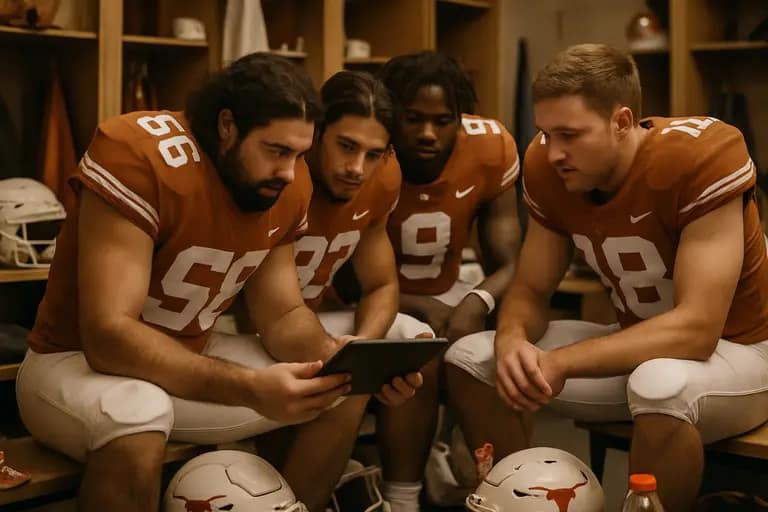
For Texas, the 2026 core showed that development is no longer only about improving a player’s swing path, pitch mix or strength profile. It is also about building a roster environment where productive players see a reason to return. Harrison, Riojas and Grubbs were not freshmen waiting for a first opportunity. They were older pitchers with value, and Texas kept them in the program long enough for their experience to shape a College World Series run.
That matters for how Austin evaluates Schlossnagle’s program. Recruiting still draws attention, and transfer additions are easy to discuss. The harder part is keeping enough proven players in place so the staff can teach from a base of trust rather than constant introduction. The 2026 season offered a strong example of that working on the mound and in the lineup.
Austin Saw The Value Of Continuity
College baseball in Texas is tied closely to local identity. Families, high school coaches, youth programs and former players all track whether the Longhorns are building something repeatable or only stacking short-term talent. A roster with returning pitchers, established hitters and select additions gives the community a clearer development story to follow.
That is especially relevant in Central Texas, where the Longhorns sit in the middle of a strong baseball pipeline. When players improve, stay and take on larger roles, the message reaches beyond the college clubhouse. It tells recruits and local coaches that there is a path at Texas that can include patience, competition and postseason stakes.
What The Longhorns Returning Core Proved In 2026
The Lesson For Texas Baseball Is Specific
The 2026 Longhorns did not reach Omaha because of one category alone. The season was built on older arms, Volantis’ rise, proven offensive returners and lineup support from players such as Tinney and Robbins. The key point is how those pieces interacted. Pitching continuity reduced weekend strain. Offensive carryover helped stabilize run production. Roster retention gave the coaching staff enough known value to make sharper decisions.
For Texas Baseball Review readers, that is the takeaway from the completed 2026 season. The Longhorns Returning Core was not a slogan; it was a roster structure that shaped how Texas competed. In a state where college baseball identity runs through development, recruiting and postseason expectation, the 2026 Longhorns showed that keeping the right players can be just as meaningful as finding the next ones.