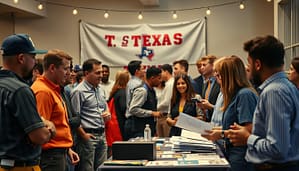
Welcome! Let’s explore how a big sports weekend can change a town. The excitement in the stadium is just the start. The real magic happens outside.
Imagine throwing a stone into a pond. The splash is the game itself. But the ripples spread, touching shops, restaurants, and community pride.
In 2024, games at Travis Fields in Bryan brought in over $4.4 million and over 70,000 visitors. This was a huge win for the local economy!
It’s not just about tickets. Visitors also spend on meals, hotels, and souvenirs. This visitor spend helps the local economy grow.
For example, San Antonio’s Final Four could bring in $440 million from 100,000 guests. The idea is the same. A busy weekend means more money for local businesses.
This section will show you how sports weekends boost a town’s local economy. You’ll see how planning can make the most of visitor spend.
Inputs: attendance, travel distance, lodging nights, food/merch spend
Before counting any money, we need to track what visitors do. We call these the key inputs. They show us the financial impact of a weekend.
Think of it like baking a cake. You need specific ingredients in specific amounts. For our economic model, the four essential ingredients are:
- Attendance: The total number of people coming through the gates.
- Travel Distance: How far fans travel, which dictates their stay.
- Lodging Nights: The number of hotel rooms booked for nights.
- Food & Merchandise Spend: Money spent on everything from hot dogs to team hats.
Let’s break down why each input matters. First, attendance. This number is often much bigger than you think! It includes families, alumni, scouts, and neutral fans from the region. Every person in the stands is a possible spender in your town.
Next, travel distance tells us about lodging. Fans driving in from two hours away might just come for the day. But those flying in from another state? They’re staying overnight, often for two or three nights. This directly creates lodging nights, a massive driver for local hotels and restaurants.
Look at the scale big events can create. The AAU Junior National Volleyball Championships in Orlando drew 325,500 attendees and filled nearly 400,000 hotel room nights. Even the USBC Open Championships, with 146,050 attendees, generated over 56,000 room nights. This shows how visitor volume translates directly into hotel revenue.
Lastly, we have spending on food, drinks, and merchandise. This is the most visible boost. Visitors eat at local diners, grab coffee downtown, and buy souvenirs. This spending goes straight into the cash registers of local businesses, creating what we often call the “direct impact.” Combined with ticket revenue for the host institution, it forms the core of the weekend’s economic activity.
By tracking these four inputs—attendance, travel, lodging, and spend—you build a solid foundation. You’re no longer guessing about impact. You’re measuring the real visitor footprint that fuels your local economy every game weekend.
Simple CBA Model for a Series Weekend (Sample Numbers)
A Cost-Benefit Analysis is easy to grasp. It’s about comparing “what comes in” versus “what goes out” for your community. We’ll use real numbers to make it clear and empowering!
On the benefit side, add up all the new money visitors bring. This includes hotel stays, restaurant meals, local shopping, and local transportation. Every gas fill-up or taxi fare adds to the local economy.

On the cost side, count what the city or venue spends to host the event. This includes extra police, utilities for the ballpark, and cleanup crews. It’s the investment for a smooth and safe weekend.
Let’s look at real examples. The NXTPRO Puma Pro16 National Finals in Bryan had a $5 million economic impact. A season at Travis Fields can bring over $4 million in direct spending. These figures are real money at local businesses.
Now, let’s imagine a single weekend series. We’ll use conservative, rounded numbers for a three-game set.
| Category | Estimated Benefit (Revenue) | Estimated Cost (Expense) |
|---|---|---|
| Lodging (Hotel Rooms) | $120,000 | $0 |
| Food & Retail | $85,000 | $0 |
| Local Transportation | $15,000 | $0 |
| Venue Operations | $0 | $8,000 |
| Security & Safety | $0 | $5,000 |
| Cleanup & Utilities | $0 | $2,000 |
Just add up the Benefit column. That’s $220,000. Then, add up the Cost column, which is $15,000. The net impact is the benefit minus the cost.
$220,000 (Benefit) – $15,000 (Cost) = $205,000 (Net Positive Impact)
That’s over two hundred thousand dollars of new economic activity from one weekend! The model shows a clear gain after covering expenses. It turns economic impact into tangible, calculable results you can celebrate.
Vendors and student jobs: concessions, ops, security, media interns
When college baseball games fill the stands, a whole team works behind the scenes. This effort is more than just a game; it’s a chance for people to earn money and learn new skills. It’s a way to make a difference in your community.
Think of a big tournament as a small business incubator. Local vendors are the first to benefit. They run the concession stands, selling food and drinks. This keeps money in the local economy.
The operations crew is another key group. They take care of the field, facilities, and fans. They make sure everything runs smoothly, from the lights to the gates.
Security is also vital. Local companies or hired staff keep the event safe. They manage crowds and ensure a safe environment for everyone.
These events are great for student jobs. Nearby universities often place media interns at the games. Students learn about sports journalism and broadcasting in action.
This experience can launch a career. Working at a NCAA tournament is a big deal on a resume. It shows that education is practical and rewarding.
The impact of these jobs goes beyond the event. The money spent at local businesses boosts the economy. Skills learned, like customer service and production, stay in the community.
The real value is in the opportunities created. A game weekend employs your neighbors and invests in your students. It strengthens the local economy, one game at a time.
Off‑season uses of the park: concerts, high‑school playoffs, youth tourneys
A community’s economy gets a big boost when its sports facility stays active all year. A good ballpark is more than just a place to play ball. It’s a place where people come together all year round.
Imagine a venue that’s empty for six months. But what if it hosted concerts, high-school games, and youth tournaments? That would be a perpetual economic engine for your town.
Let’s look at how this works. A weekend tournament can bring hundreds of families. They spend money on hotels, food, gas, and souvenirs. This money helps the local economy.
High-school games also draw people from around. These events make your town a place of pride and excitement. The spending goes beyond the stadium, helping local businesses.
Concerts and big events attract different people. They use the park’s facilities in new ways. This variety is key to keeping the economy strong.
Take Travis Fields as an example. It’s almost always booked until 2027. This isn’t just baseball. It’s a year-round flow of events.
Venues like the Legends Event Center in Bryan show this model works. They host basketball, expos, and banquets. Your college ballpark can be the same for your area.
Here’s what a vibrant off-season calendar can look like:
- Spring & Fall: Youth travel tournaments for baseball, softball, soccer, and lacrosse.
- Late Fall: High-school football playoff games or cross-country championships.
- Winter: Community festivals, holiday light shows, or indoor training camps.
- Summer (pre-college season): Large-scale concerts, graduation ceremonies, or corporate gatherings.
This approach does more than fill hotel rooms. It builds a reputation. Your town becomes known for hosting big events. This attracts more organizers, creating a cycle of growth.
Turning your park into a year-round venue is smart economics. It brings visitors, supports jobs, and keeps the local economy strong. The goal is to make the facility essential to the local economy, all year.
Mitigating negatives: traffic, litter, noise; community agreements
Every dollar of visitor spend should come with a plan to protect the quality of life for residents. It’s the mark of a smart, sustainable host community. A sudden influx of fans creates real pressure points. But with foresight, these aren’t problems; they’re just items on a pre-game checklist.
Think about the main friction points: game-day traffic snarls, litter left in parking lots and parks, and the hum of a late-night crowd. For locals, these can feel like an invasion. The goal isn’t to stop the fun, but to manage its footprint. This is where transparent community agreements become your playbook.
What does a good agreement look like? It’s a collaborative plan, drafted with input from city officials, police, local businesses, and neighborhood associations. It turns conflicts into coordinated action. You’re not just reacting to complaints; you’re building a system.
- Traffic Flow: Coordinate with local police for dedicated ingress and egress routes. Use temporary signage and volunteer guides to keep cars moving. Many towns reference official traffic impact studies to plan effectively.
- Litter Patrol: Organize volunteer cleanup crews for before, during, and after the event. Place extra trash and recycling bins in high-traffic areas. Some programs even partner with local scout troops or sports teams.
- Noise Management: Set clear, communicated quiet hours for evening events. Work with sound technicians to direct noise toward the field and away from nearby homes.

The payoff is huge. When residents see their concerns addressed proactively, goodwill soars. They’re more likely to welcome the event, work at it, and even attend games themselves. This positive local sentiment is contagious—teams and fans feel welcomed and want to return.
Ultimately, managing these logistics safeguards the very thing that makes the visitor spend possible: a happy, functional town. It shows you value both your guests and your citizens equally. This balance is what transforms a one-time tournament into an annual tradition that everyone looks forward to.
By turning negatives into managed processes, you ensure the economic boost from fans doesn’t come with a hidden social cost. The community thrives, businesses profit, and the game’s positive impact lasts long after the final out.
How to run a quick post‑series merchant survey
You’ve noticed the weekend ripple effect. Now, it’s time to prove it with solid numbers. A simple merchant survey can turn your observations into powerful evidence.
Focus your survey on the frontline businesses. Reach out to local hotels and restaurants. Their direct experience is your most reliable data source.
Keep your questions short and friendly. Ask, “Did you notice more customers during the series?” Request a simple estimate of extra sales. This direct feedback is incredibly valuable.
That feedback transforms stories into facts. Concrete data from hotels and restaurants makes your case to city officials. It shows the real value of hosting events.
Create a one‑page form or a quick online poll. Share it with business owners right after the series ends. Their fresh memories provide the best estimates.
This tool empowers you to champion your community’s success. Use the data to secure future games and support. Your town’s economic story deserves to be told with confidence!